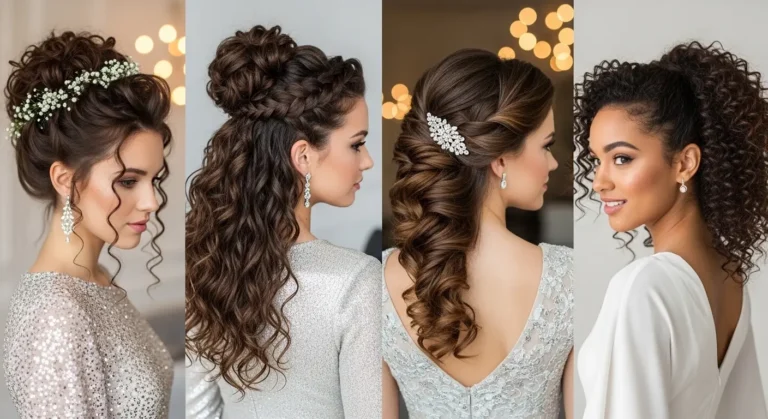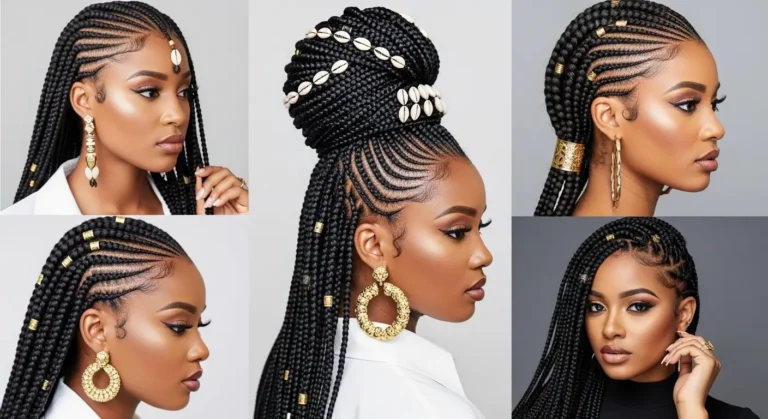
Braided Hairstyle Ideas for a Chic and Modern Look Today
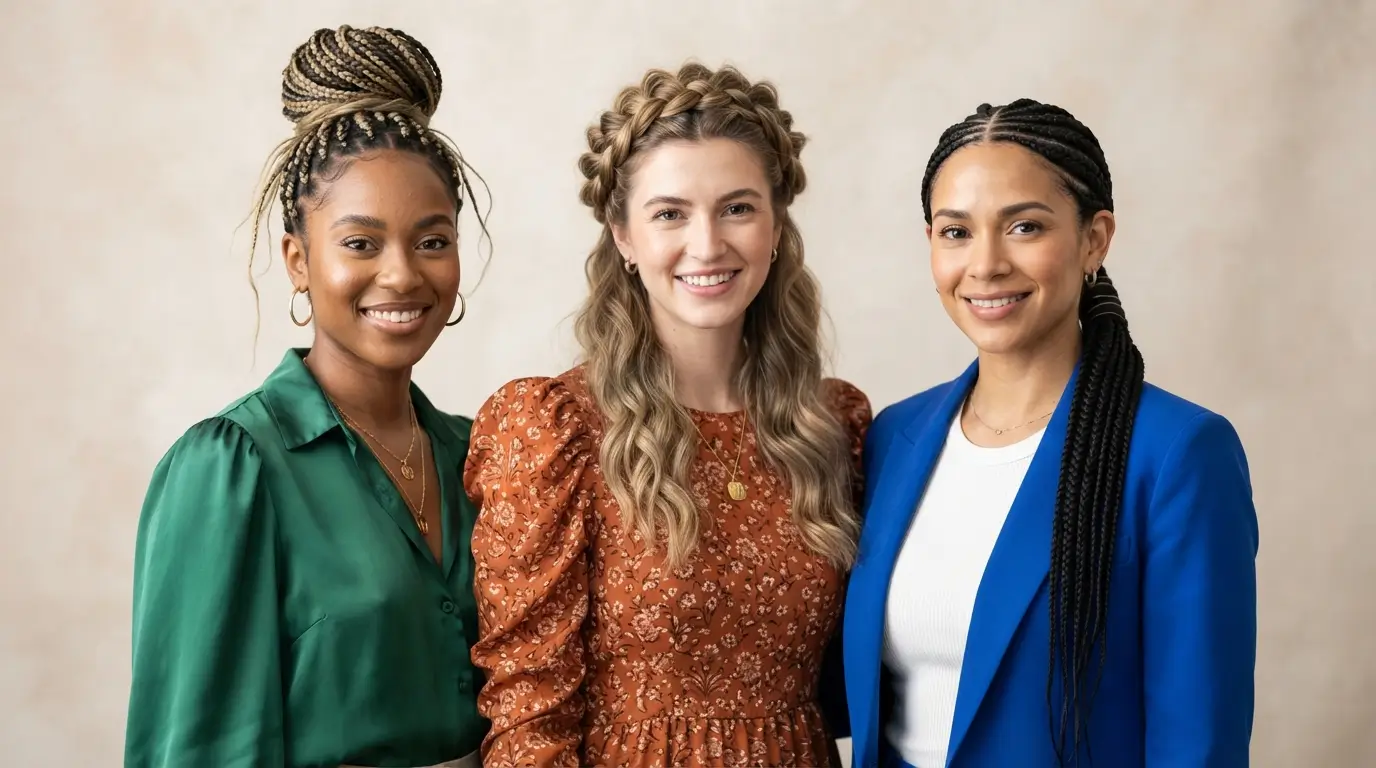
Braided hairstyles remain popular because they combine beauty, practicality, and creative styling. A braid can keep hair away from the face, control long or thick strands, protect delicate ends, and make an everyday outfit feel more polished. Depending on the technique, braids can look relaxed, professional, romantic, sporty, or elegant. Braided hairstyle
Another reason braids stay relevant is their flexibility. Simple three-strand braids work well for busy mornings, while crown braids, braided buns, and detailed updos can suit weddings or formal events. Protective braided styles can also reduce daily manipulation when they are installed and maintained correctly.
Women with straight, wavy, curly, coily, fine, thick, short, medium, or long hair can wear some form of braid. The right option depends on your hair length, density, scalp comfort, styling ability, and the amount of maintenance you prefer.
In this guide, you will discover 17 braided hairstyle ideas for a chic and modern look today. You will also learn how to select a flattering braid for your face shape and hair type, maintain healthy strands, avoid common styling mistakes, and explain your preferred result clearly to your stylist or professional braider.
Quick Answer
Modern braided hairstyle ideas include French braids, Dutch braids, fishtail braids, braided ponytails, crown braids, and knotless box braids.
Loose braids create a soft everyday look, while tighter, structured styles offer more control and longer wear.
Choose a braid according to your hair length, texture, density, scalp sensitivity, and maintenance routine.
Use gentle products and avoid excessive tension to protect the hairline and reduce breakage.
Table of Contents
- Best Braided Hairstyle Ideas for a Chic and Modern Look
- How to Choose a Braided Hairstyle for Your Face Shape
- How to Choose a Braided Hairstyle for Your Hair Type
- Styling and Maintenance Tips
- Braided Hairstyle Comparison Table
- Common Mistakes to Avoid
- Frequently Asked Questions
- Conclusion
Best Braided Hairstyle Ideas for a Chic and Modern Look Today
Classic Three-Strand Braid
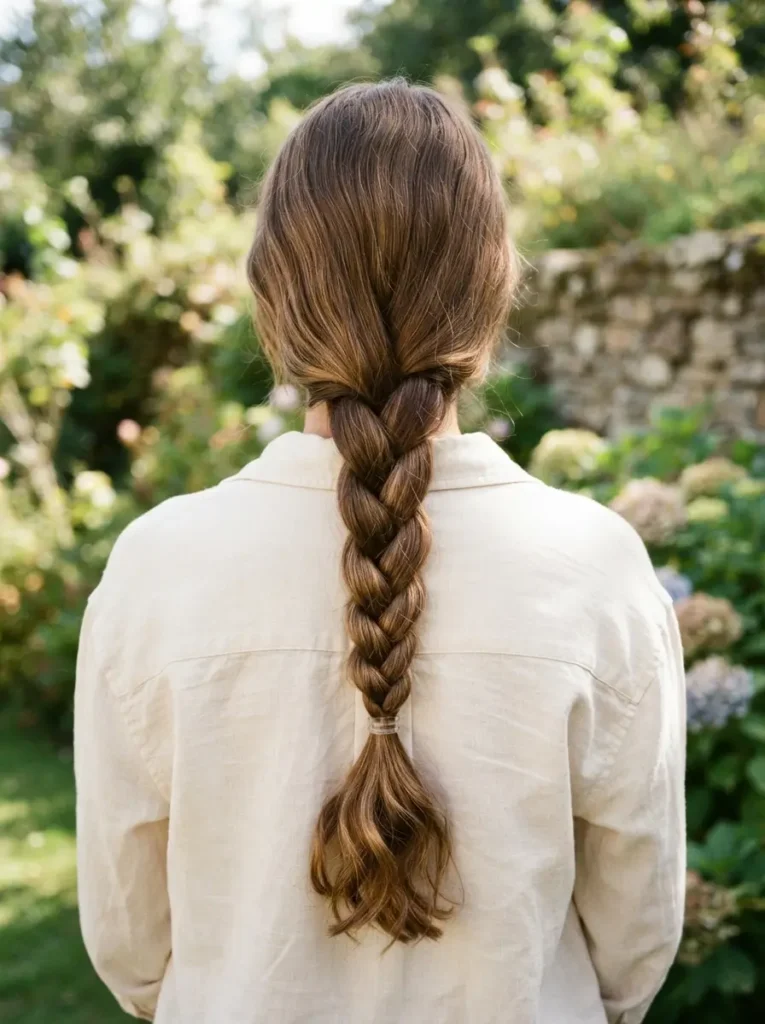
The classic three-strand braid is one of the easiest and most dependable braided hairstyles. The hair is divided into three equal sections, then the outer pieces are crossed over the center until the braid reaches the ends. It creates a neat, balanced pattern without requiring advanced technique. You can wear it down the back for a traditional finish or bring it over one shoulder for a softer, more relaxed appearance. Gently loosening the braid can make it look fuller and more modern.
This style suits medium and long hair with straight, wavy, curly, fine, or thick textures. Maintenance is very low because it takes only a few minutes and can be recreated daily. Use a lightweight texture spray if clean hair feels too slippery, and secure the end with a fabric-covered elastic. Ask your stylist to keep the lower layers long enough to remain inside the braid if you wear this style regularly. Avoid pulling the hair too tightly near the scalp, especially when your hairline is delicate or prone to breakage.
Loose French Braid
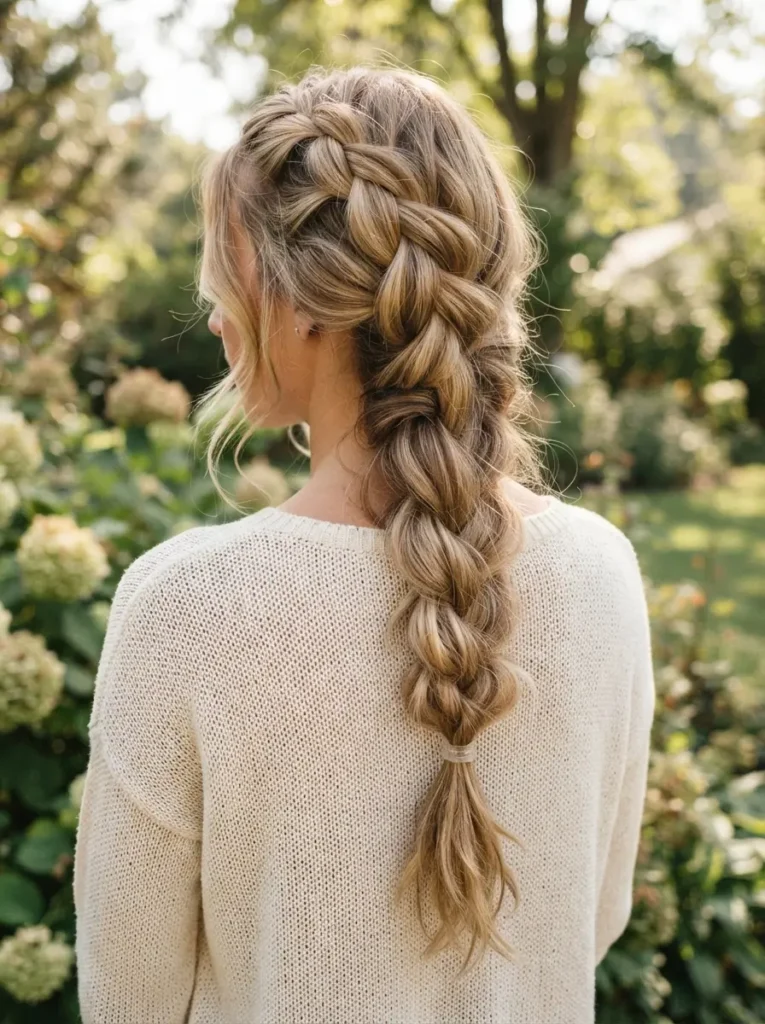
A loose French braid begins near the crown and gradually includes new hair from both sides as it moves toward the nape. The technique keeps the hairstyle secure while creating a smooth woven pattern across the back of the head. Wearing the braid slightly loose gives it a softer and more modern feeling than a tightly pulled school-style braid. Small face-framing pieces can be left free to create movement around the forehead, temples, and cheeks.
This braid suits medium and long hair with straight, wavy, curly, or thick textures. Fine hair can also wear it after applying dry shampoo or texture mist for additional grip. Maintenance is low, and the style can often last through a full day when secured correctly. Ask your stylist for long, connected layers if you want fewer loose pieces around the back. When having the braid professionally styled, request comfortable tension and a soft finish rather than a tightly pulled result. Gently widen the woven sections after braiding if you want the style to appear fuller.
Double Dutch Braids
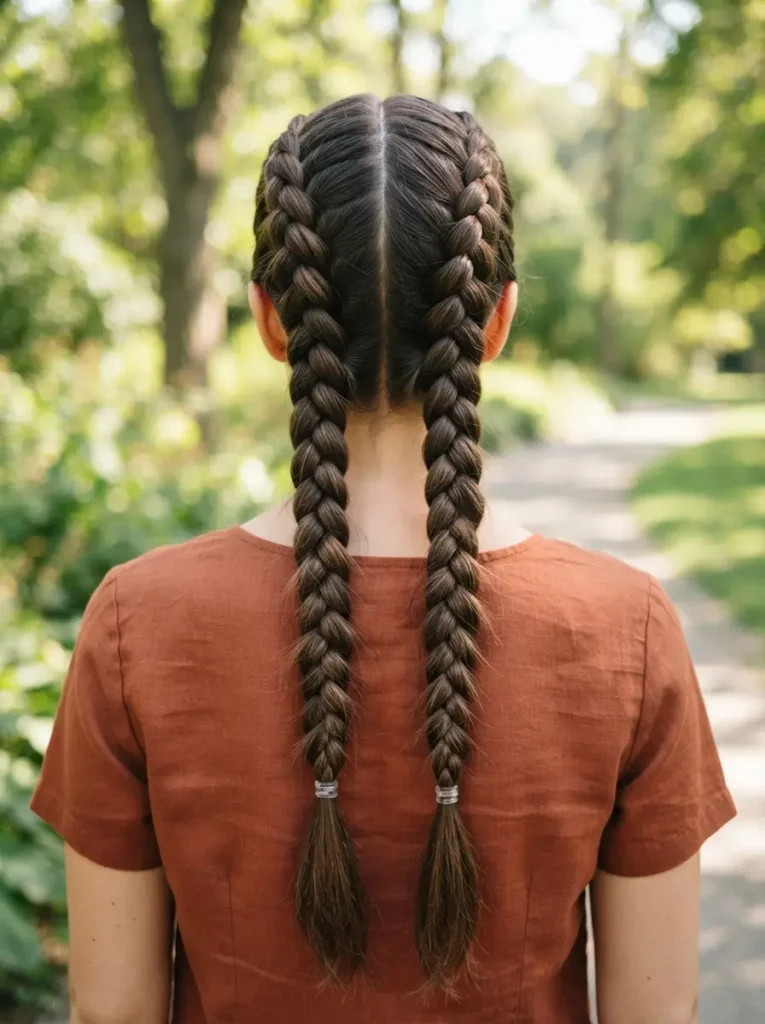
Double Dutch braids create two raised braids running from the front hairline toward the nape. Unlike French braids, each outer section passes underneath the center piece, causing the braid to sit visibly above the surrounding hair. The symmetrical design feels sporty, youthful, and modern while keeping the hair controlled. The braids can end at the nape in two ponytails or continue through the full length for a secure all-day style. Braided hairstyle
This hairstyle suits medium and long-haired individuals with straight, wavy, curly, thick, or textured strands. Maintenance is low for a one-day style, although it may require practice to create even sections at home. Apply light gel or styling cream along the part and hairline to control flyaways. Ask your stylist or braider to create a straight center part and keep the tension comfortable around the temples. If your scalp feels sore, the braids are too tight. Use soft elastics at the ends and avoid wearing tightly braided sections in the same places every day.
Soft Fishtail Braid
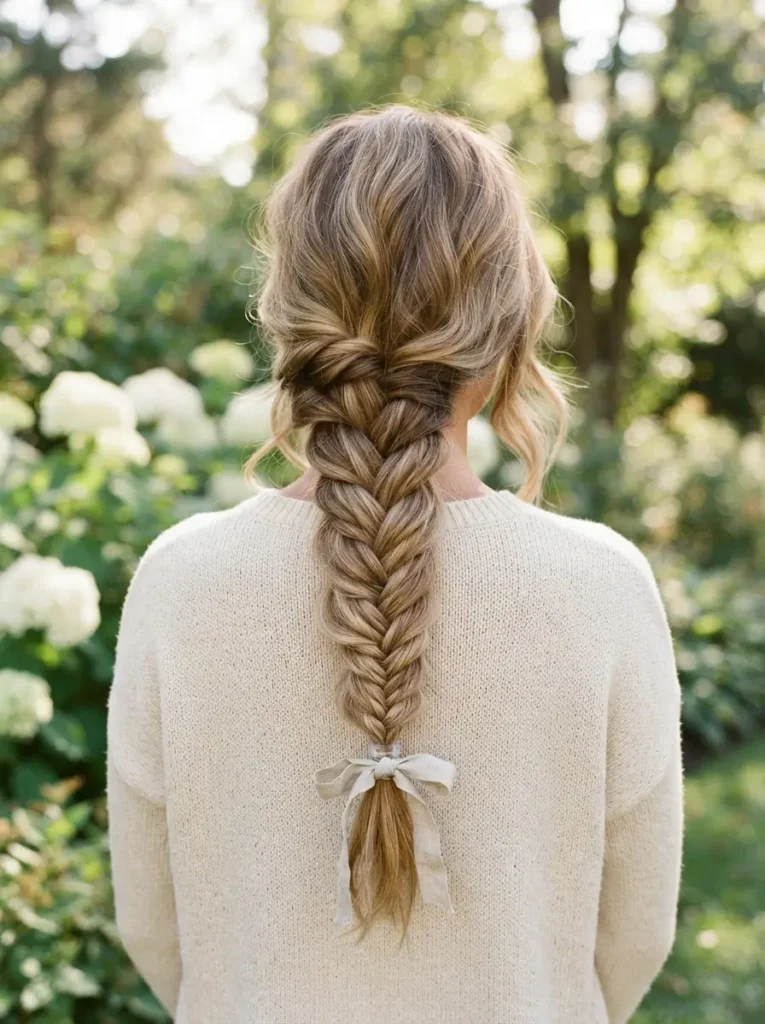
The soft fishtail braid uses two main sections instead of three. Small pieces are taken from the outer edge of each section and crossed toward the opposite side, creating a detailed woven pattern. Although it looks complicated, the technique becomes easier with practice. Gently pulling apart the finished braid creates a fuller, relaxed effect that feels romantic and modern. It works particularly well over one shoulder or as part of a low ponytail.
This hairstyle suits medium and long hair, especially straight, wavy, fine, and medium-density textures. Thick hair can also create a dramatic fishtail, although the braid may feel heavier. Maintenance is low because the style is usually worn for one day. Apply texture spray before braiding if the hair lacks grip. Ask your stylist for minimal short layers if fishtail braids are part of your routine. When requesting this style professionally, specify whether you want a neat, narrow pattern or a wide, loosened finish with soft face-framing pieces. Braided hairstyle
Side-Swept Dutch Braid
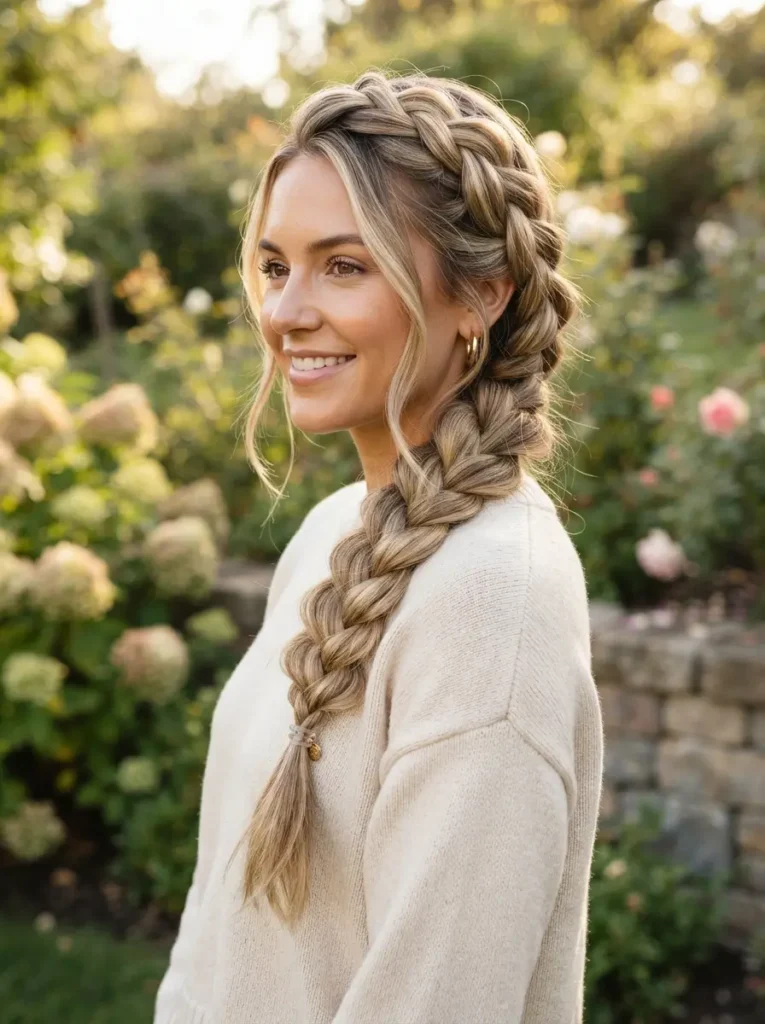
A side-swept Dutch braid begins near one temple and moves diagonally across or around the head before falling over one shoulder. The raised braid creates a clear pattern, while the diagonal direction adds movement and visual interest. This style feels more distinctive than a standard center braid but remains suitable for everyday wear. It can be neat and polished or gently loosened for a romantic, textured appearance.
This braid suits medium and long hair with straight, wavy, curly, or thick textures. It can be especially flattering when you prefer an asymmetrical hairstyle or want to keep hair away from one side of the face. Maintenance is low, though the diagonal placement may be easier for a stylist to create. Use a small amount of styling cream to control shorter pieces. Ask your stylist to begin the braid on the side that works with your natural parting and facial features. Request soft tension near the front hairline and enough fullness through the braid to avoid a flat result.
Braided Low Ponytail

A braided low ponytail combines the simplicity of a ponytail with the detail of a braid. The hair is secured near the nape and braided through the length using a three-strand, fishtail, or rope technique. The low placement creates a polished shape that can work for the office, travel, errands, or evening plans. Wrapping a small section of hair around the elastic can hide the base and make the style look more finished.
This hairstyle suits medium and long hair with straight, wavy, curly, fine, or thick textures. Maintenance is very low because the ponytail base makes the braid easier to control. Use smoothing cream near the crown for a sleek finish or texture spray for a softer look. Ask your stylist for longer lower layers if you want the braid to remain neat through the ends. Avoid securing the ponytail too tightly at the nape. A silk or fabric-covered elastic can provide a comfortable hold while reducing friction and breakage. Braided hairstyle
Half-Up Braided Crown

A half-up braided crown uses sections from both sides of the head and connects them across the back, creating the appearance of a delicate woven band. The remaining hair stays loose, preserving length and natural movement. This combination feels romantic and polished without becoming a full-updo. The braids can be simple three-strand sections, small Dutch braids, or soft twists, depending on the desired level of detail.
This style suits bob-length, medium, and long hair with straight, wavy, curly, or fine textures. Maintenance is low, and it can be created for everyday wear, parties, or relaxed formal events. Add light texture spray before braiding if the side sections slip easily. Ask your stylist for long face-framing layers that can remain loose without appearing disconnected. When requesting the style professionally, explain whether you want the braids positioned near the crown or lower across the back. Small, clear elastics and concealed pins will help create a clean, comfortable finish. Braided hairstyle
Braided High Ponytail

A braided high ponytail places the base near the crown and continues into a long braid. The lifted position creates an energetic, confident appearance while keeping the hair away from the face and neck. The ponytail may be braided tightly for a sleek look or loosened for more volume. A wrapped base, polished edges, or decorative accessory can make the style feel more refined for an event.
This hairstyle suits medium and long hair with straight, wavy, curly, thick, or coily textures. Maintenance is low for a temporary style, but high placement should not feel painful or overly tight. Use gel or smoothing cream sparingly around the hairline, and protect the lengths with lightweight leave-in conditioner. Ask your stylist or braider to distribute the weight evenly and avoid excessive pulling around the temples. If added hair is used, request a manageable length and weight. Change the ponytail position between wears to reduce repeated stress on the same areas.
Crown Braid Updo
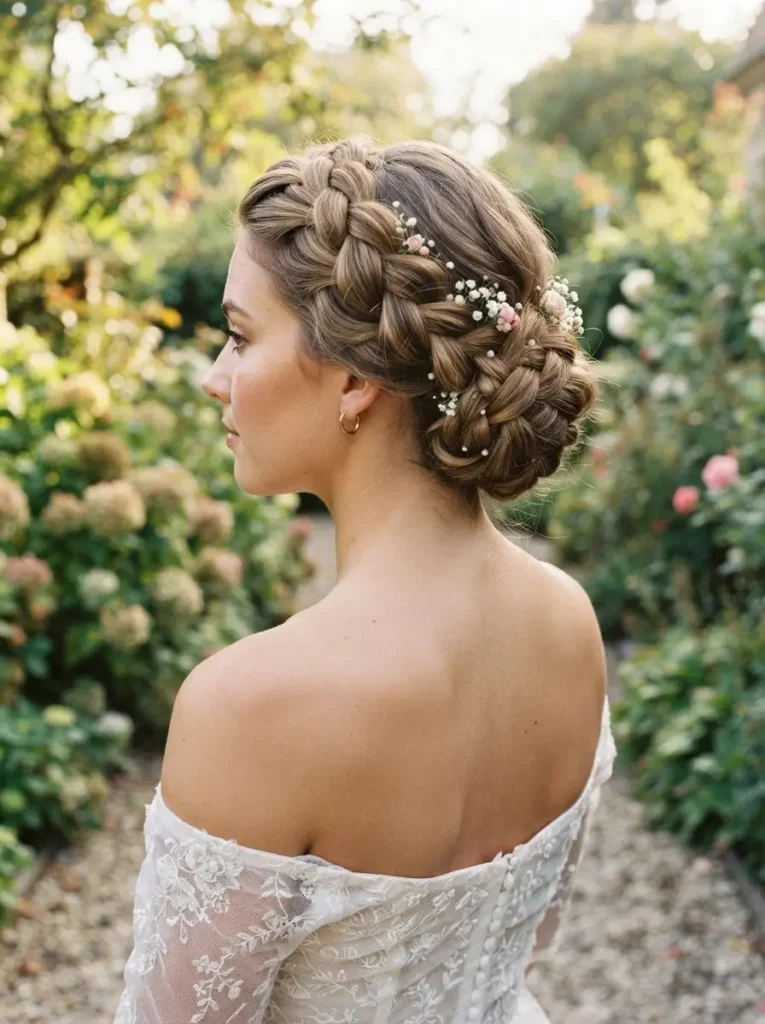
A crown braid updo wraps a braid around the head like a headband or halo. The style keeps most of the hair secured while creating an elegant, balanced silhouette. It can look neat and formal or soft and slightly undone, depending on how tightly the braid is woven. Crown braids are especially attractive from several angles because the detail continues around the sides and back instead of appearing only in one area.
This updo suits medium and long hair with straight, wavy, curly, or thick textures. Maintenance is moderate because secure pinning is important, especially for events. Apply texture spray before braiding to improve grip, and use flexible hairspray after the braid is pinned. Ask your stylist to customize the crown height and leave face-framing pieces if you prefer a softer look. Request comfortable tension around the temples and behind the ears. A crown braid should feel secure without causing scalp soreness or pulling at the hairline. Braided hairstyle
Braided Low Bun

A braided low bun combines woven detail with a compact updo at the nape. The hair can be braided first and then wrapped into a bun, or several smaller braids can be pinned together. The low placement creates an elegant, comfortable silhouette that works for professional settings, weddings, dinners, and formal occasions. It also keeps the ends protected and prevents long hair from moving around throughout the day.
This hairstyle suits medium and long hair with straight, wavy, curly, fine, or thick textures. Maintenance is moderate because the bun requires secure but gentle pinning. Fine hair can use texture spray or a small padding accessory for fullness, while thick hair may need stronger pins. Ask your stylist to keep the bun proportional to your head and position it where it will not press uncomfortably against a chair or headrest. Request soft face framing for a romantic finish or a clean part and smooth surface for a polished look.
Waterfall Braid
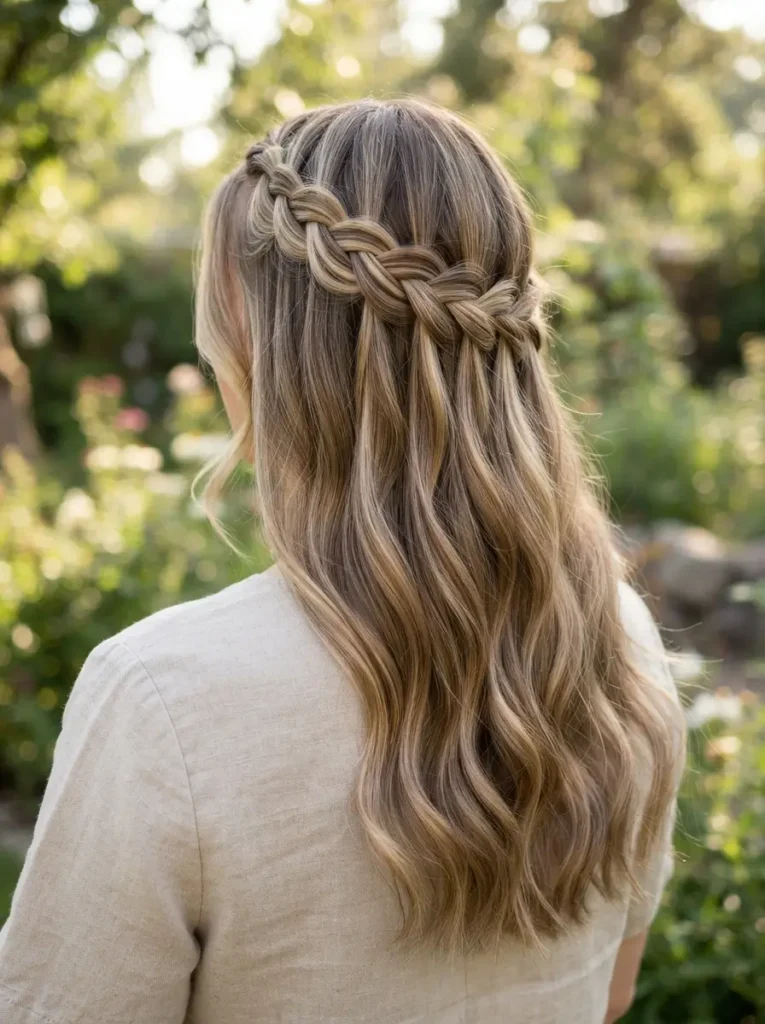
The waterfall braid creates a woven section across the side or back of the head while allowing selected pieces to fall through the braid. These loose strands resemble a waterfall and blend into the remaining hair. The style looks detailed but still keeps most of the length visible. It works particularly well with waves because the released sections become part of the flowing texture. The result feels feminine, light, and suitable for both casual and special occasions.
This braid suits medium and long-haired individuals with straight, wavy, fine, or medium-density textures. It can also work on loose curls, although very tight curl patterns may hide some of the woven detail. Maintenance is low because it is generally worn for one day. Use a little texture mist before styling and secure the end discreetly with pins. Ask your stylist to place the braid above or below the crown according to your preferred shape. Soft waves through the released pieces will make the waterfall pattern easier to see.
Rope Braid Ponytail
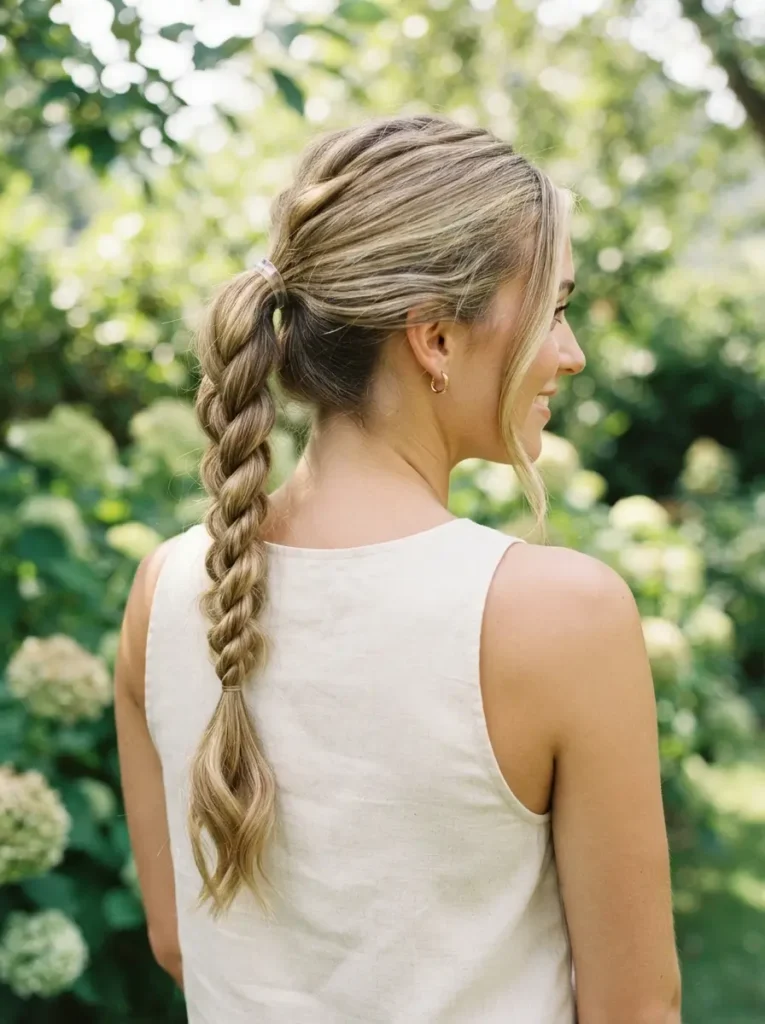
A rope braid ponytail uses two twisted sections wrapped around each other to create a clean spiral pattern. It is faster than many traditional braiding techniques but still looks polished and modern. The braid can begin at a high, middle, or low ponytail, allowing the style to suit different settings. A sleek base creates a refined finish, while a slightly loosened rope braid feels softer and more casual.
This style suits medium and long hair, particularly straight, wavy, thick, and smooth textures. Fine hair can wear it after using volumizing mousse or texture spray for additional grip. Maintenance is very low because the ponytail keeps the two sections controlled. Ask your stylist to preserve enough length if you regularly wear braided ponytails. When styling, twist both sections in the same direction, then wrap them around each other in the opposite direction. Use a gentle elastic and avoid pulling the base excessively tight. Braided hairstyle
Knotless Box Braids
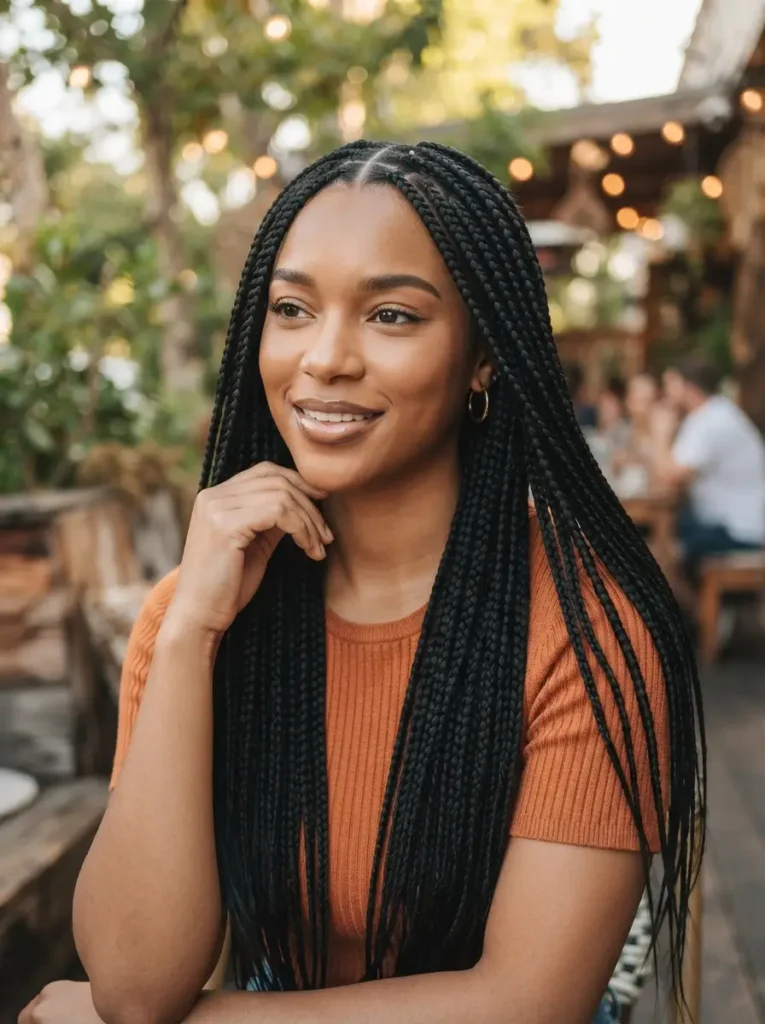
Knotless box braids are created by gradually feeding extension hair into the natural hair instead of beginning each braid with a large knot. This technique produces a flatter base and can feel lighter than traditional box braids when installed correctly. The finished style offers many options, including ponytails, buns, half-up looks, and loose braids. Size, length, color, and parting can be customized for a natural or bold result.
This protective style suits curly, coily, and textured hair, although installation should always consider scalp sensitivity and strand strength. Maintenance is moderate, and the style is commonly worn for several weeks rather than indefinitely. Keep the scalp clean, moisturize lightly, and protect the braids with a satin scarf or bonnet at night. Ask a professional braider for comfortable tension, manageable extension weight, and clean sections that do not pull around the edges. Pain, bumps, or headaches are signs that the braids may be too tight.
Medium Box Braids
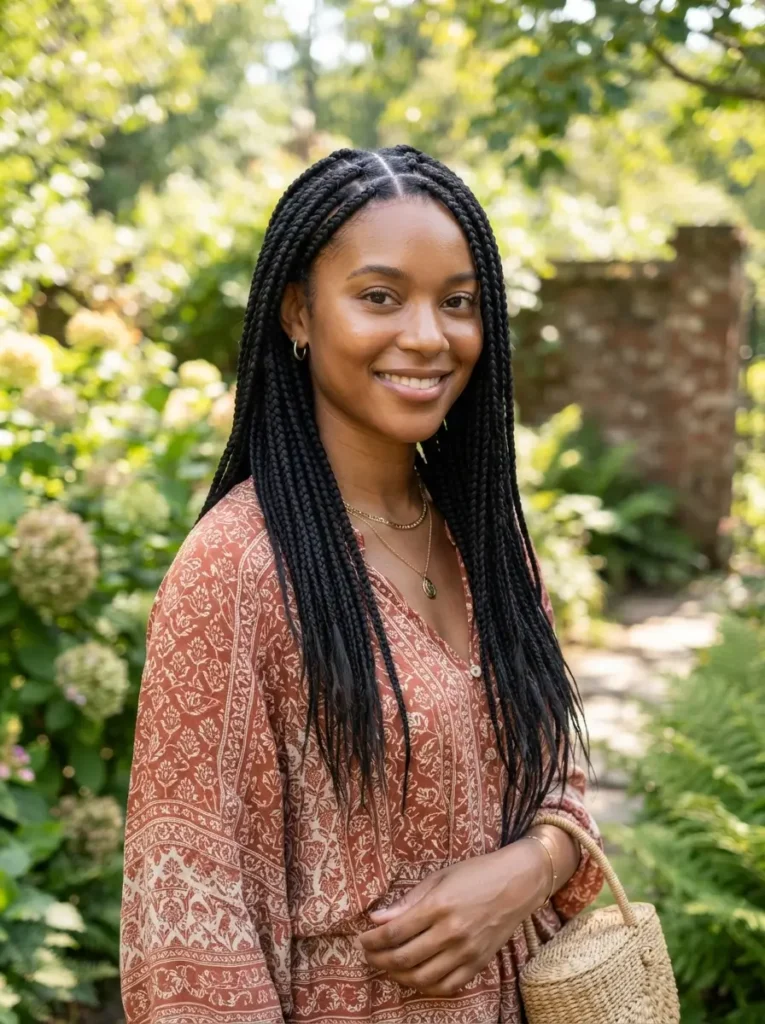
Medium box braids divide the hair into square or similar-shaped sections before each section is braided individually. The medium size offers a balance between styling flexibility and manageable installation time. The braids can be worn down, tied into a ponytail, gathered into a bun, or styled half-up. They create a defined, modern look while reducing the need to manipulate natural hair every morning.
This style is most commonly suited to curly, coily, and textured hair. Maintenance is moderate, and scalp care is essential throughout the wear period. Use lightweight scalp products rather than heavy grease that may create buildup. Sleep with a satin bonnet or scarf and avoid pulling the braids into tight hairstyles repeatedly. Ask your braider to use sections and extension weight that match the strength of your natural hair. The braids should not feel painful during or after installation. Schedule removal before tangling, buildup, or excessive new growth becomes difficult to manage.
Cornrow Braided Ponytail

A cornrow braided ponytail combines close-to-the-scalp braids with a gathered ponytail at the crown or back. The cornrows can follow straight, curved, or geometric patterns, creating detail before connecting to the ponytail. The result looks polished, modern, and practical. The style keeps the front and sides controlled while allowing the ponytail to provide length, movement, or additional braided texture.
This hairstyle suits curly, coily, and textured hair and may include natural hair or added braiding hair. Maintenance is moderate, and scalp comfort should remain the main priority. Clean the scalp gently, avoid heavy buildup, and protect the style at night with satin fabric. Ask a skilled professional braider for a pattern that suits your hairline and density. Request light, even tension, and a ponytail that is not excessively heavy. Avoid wearing the style longer than recommended, and remove it if you notice persistent soreness, bumps, or thinning around the edges.
Braided Bob
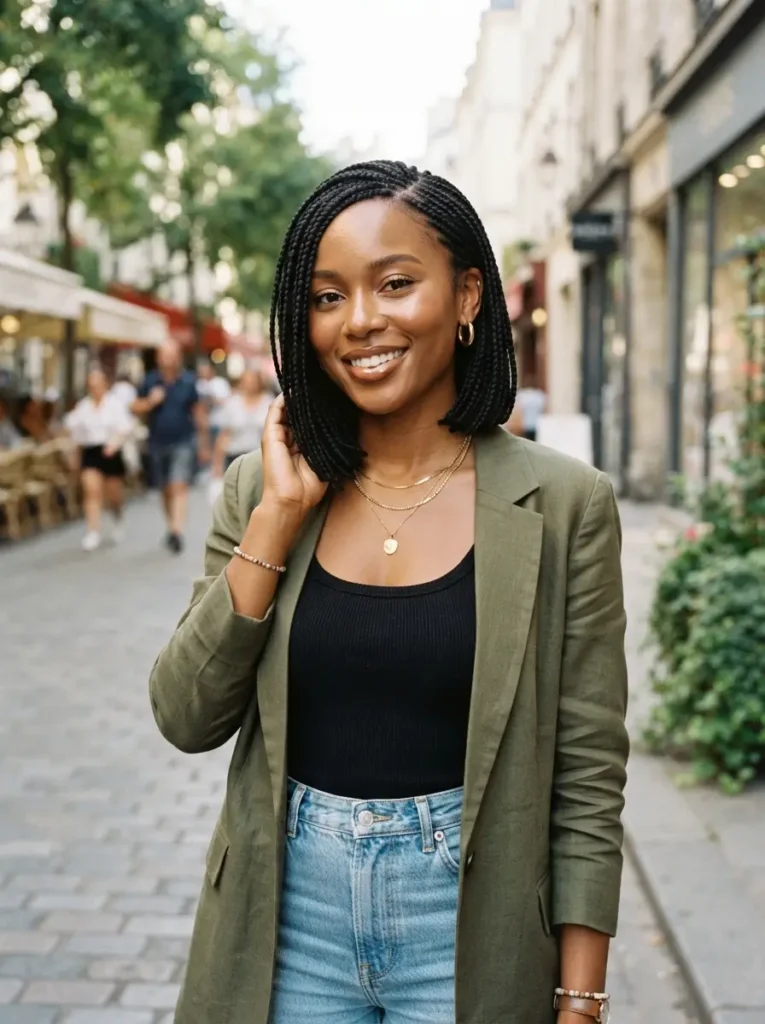
A braided bob uses individual braids that end around the jaw, neck, or shoulders. The shorter length creates a neat, lightweight silhouette while preserving the detail and versatility of a braided protective style. The ends may be sealed, curled, decorated, or shaped into a blunt line. A braided bob feels modern and confident, and its shorter length can be easier to sleep in and manage than very long braids.
This style suits curly, coily, and textured hair, especially for anyone who wants protective braids without excessive length or weight. Maintenance is moderate, and the style can remain fresh with gentle scalp cleansing and nighttime protection. Ask your braider to customize the finished length according to your face shape and neck. Request the braid size and extension weight that your natural hair can comfortably support. A slightly layered or angled braided bob can create softness, while a blunt outline produces a stronger geometric result.
Loose Boho Braid
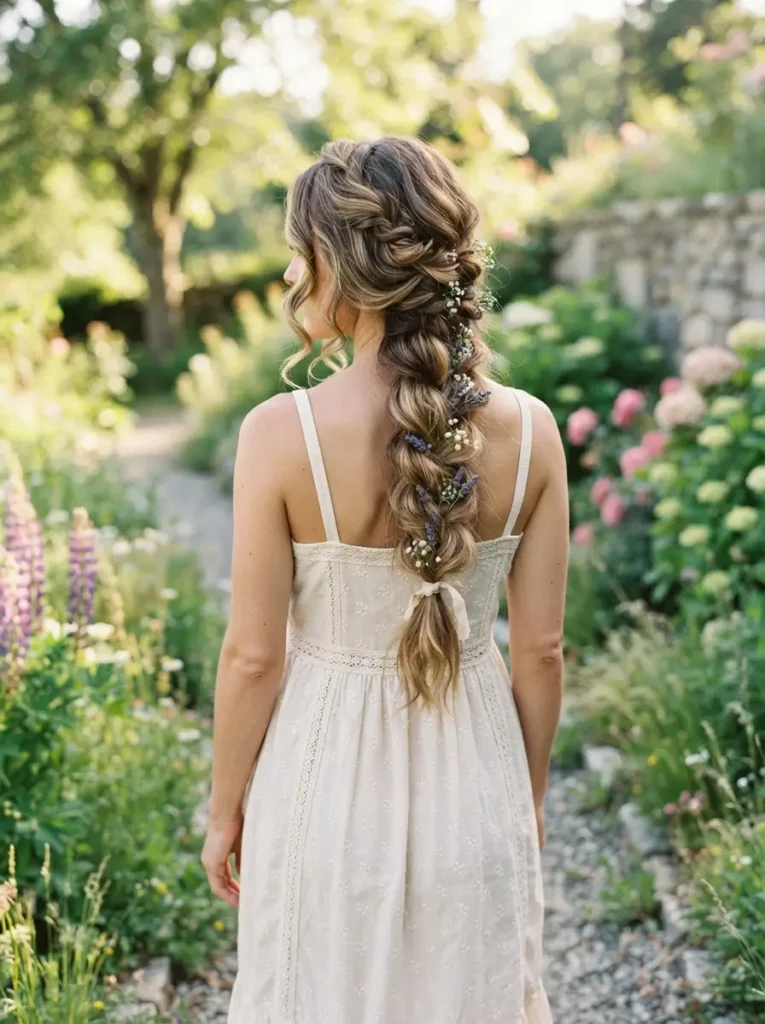
A loose boho braid combines a relaxed braid with soft pieces around the face and naturally textured lengths. The braid may be worn down the back, over one shoulder, or connected to a half-up style. Small loops are gently pulled outward to create width, while selected strands remain loose for an intentionally undone finish. This hairstyle works because it feels detailed without looking rigid or overly formal.
This braid suits medium and long hair with wavy, curly, fine, medium, or thick textures. Maintenance is low because slight looseness and irregularity are part of the final look. Use dry texture spray before braiding and lightweight hairspray afterward. Ask your stylist for soft face-framing layers if you regularly wear romantic braided styles. When requesting a professional boho braid, specify how loose you want the sections and whether you prefer natural texture, added waves, or small decorative accessories. Avoid loosening the braid so much that it loses security.
How to Choose the Best Braided Hairstyle for Your Face Shape
Face shape can help guide the braid placement, parting, height, and amount of softness around the face. However, it should not limit your choices. Hair length, texture, comfort, hairline, and personal style are equally important.
Women with round faces may prefer braids that create height or vertical movement. High braided ponytails, crown braids with gentle crown lift, and long side braids can make the face appear longer. Leaving a few longer pieces beside the face may also add definition. Avoid placing maximum width directly beside the fullest part of the cheeks unless you prefer a softer, rounded effect.
Oval faces can usually wear most braided hairstyles. Center-parted Dutch braids, braided buns, side braids, box braids, and crown styles can all look balanced. Focus on your preferred mood, hair texture, and maintenance level.
Square faces often look balanced with soft braids, side parts, loose face-framing pieces, and curved placement. A relaxed side braid or braided low bun may soften a strong jawline. Very tight styles with a severe center part can create a sharper appearance.
Heart-shaped faces may benefit from braid styles that create softness near the jaw and lower sides. Low braided ponytails, side braids, and loose crown styles can balance a wider forehead. Avoid concentrating all volume only at the top unless the front sections remain soft.
Long or rectangular faces often suit braids that create width through the sides rather than extreme height. Crown braids, low buns, loose side braids, and half-up woven styles can create balance. Very high ponytails with tightly pulled sides may make the face appear longer.
Diamond-shaped faces can be complemented by softness around the forehead and jaw. Side-swept braids, loose crowns, and braided bobs can highlight cheekbones without placing all the width beside them.
Choose a braid that feels secure without changing your facial expression or pulling the hairline. Comfort should always matter more than creating a perfectly tight finish.
How to Choose the Best Braided Hairstyle for Your Hair Type
Straight hair is smooth and easy to section, but it may slip out of loose braids. French braids, fishtails, rope braids, and braided ponytails work well after using a light texture spray. Avoid applying too much smoothing serum before braiding because the sections may become difficult to control.
Wavy hair is naturally suited to relaxed braids because its texture creates grip and fullness. Side braids, boho braids, crown styles, and half-up braids can enhance the natural movement. Slightly uneven pieces often make these styles look softer rather than untidy.
Curly hair can create full, dimensional braids, but the curls should be detangled gently before styling. Loose French braids, braided ponytails, crown styles, and protective braids can all work. Use moisture and avoid brushing dry curls aggressively before braiding.
Thick hair supports large braids, detailed updos, and bold ponytails. Strong but gentle elastics and pins are important because small accessories may slip. Divide the hair evenly so one section does not become excessively heavy. A professional stylist can remove unnecessary bulk from the style without thinning your natural hair.
Thin hair often looks fuller in gently loosened braids. Fishtails, half-up crowns, low braided ponytails, and soft French braids can create visual width. Avoid pulling the braid too tightly because this may expose more scalp. Texture powder or dry shampoo can provide temporary fullness and grip.
Fine hair refers to the thickness of each strand rather than overall density. Fine strands may be delicate and prone to breakage, so heavy extensions and high tension should be avoided. Lightweight temporary braids and carefully installed protective styles are safer choices.
Coily hair can support knotless braids, box braids, cornrows, braided bobs, and many other protective styles. Installation should respect the hairline, strand strength, scalp condition, and natural density. Protective styling should never cause pain or persistent tension.
Styling and Maintenance Tips
- Detangle the hair gently before braiding to prevent knots and unnecessary pulling.
- Begin detangling at the ends and work gradually toward the roots.
- Use a lightweight leave-in conditioner when the hair feels dry or difficult to manage.
- Apply texture spray to straight or fine hair when extra grip is needed.
- Use a small amount of styling cream to control flyaways without creating stiffness.
- Avoid using excessive gel around the hairline every day.
- Keep braid tension secure but comfortable.
- Redo any section that causes pain, scalp pulling, or a headache.
- Use fabric-covered elastics instead of tight rubber bands.
- Choose pins with smooth, rounded ends to reduce scratching and snagging.
- Avoid braiding wet hair very tightly because it may shrink and create tension as it dries.
- Wash the scalp according to your needs when wearing longer-term protective braids.
- Use diluted shampoo or a scalp-friendly cleanser to reduce buildup.
- Apply lightweight moisture instead of coating the scalp with heavy grease.
- Dry the scalp and braids thoroughly after washing.
- Protect long-term braids with a satin scarf or bonnet at night.
- Sleep on a satin or silk pillowcase to reduce friction.
- Avoid repeatedly styling box braids into very tight ponytails or buns.
- Choose an extension length and weight that your natural hair can support.
- Do not ignore scalp bumps, ongoing soreness, or thinning edges.
- Trim split ends before temporary braiding when the lengths feel rough.
- Apply heat protectant before adding waves with hot tools.
- Keep hot tools away from synthetic braiding hair unless the material is heat-safe.
- Clarify the hair after removing a long-term style when buildup is present.
- Detangle slowly during braid removal to protect shed hair and fragile ends.
- Give the scalp and hair a break between high-tension protective styles.
- Clean reusable clips, combs, brushes, and accessories regularly.
- Save clear reference photos before visiting a stylist or braider.
Comparison Table
| Hairstyle | Best For | Hair Type | Maintenance | Styling Product |
| Classic Three-Strand Braid | Quick everyday styling | Most hair types | Very low | Texture spray |
| Loose French Braid | Secure soft style | Straight, wavy, thick | Low | Light styling cream |
| Double Dutch Braids | Active days and control | Most hair types | Low | Light gel |
| Soft Fishtail Braid | Romantic detailed look | Fine, straight, wavy | Low | Dry texture spray |
| Side-Swept Dutch Braid | Asymmetrical styling | Wavy, thick, long | Low | Styling cream |
| Braided Low Ponytail | Work and daily wear | Most hair types | Very low | Smoothing serum |
| Half-Up Braided Crown | Keeping hair off the face | Straight, wavy, curly | Low | Texture mist |
| Braided High Ponytail | Sporty polished style | Thick, curly, long | Low | Smoothing gel |
| Crown Braid Updo | Formal and romantic events | Medium, long, thick | Moderate | Flexible hairspray |
| Braided Low Bun | Elegant secure updo | Most hair types | Moderate | Styling cream |
| Waterfall Braid | Soft special occasions | Straight, wavy, fine | Low | Texture spray |
| Rope Braid Ponytail | Fast modern styling | Straight, wavy, thick | Very low | Light mousse |
| Knotless Box Braids | Lightweight protective styling | Curly, coily | Moderate | Scalp mist |
| Medium Box Braids | Versatile protective style | Curly, coily | Moderate | Lightweight scalp oil |
| Cornrow Braided Ponytail | Controlled statement style | Curly, coily | Moderate | Scalp moisturizer |
| Braided Bob | Short protective style | Curly, coily | Moderate | Lightweight braid spray |
| Loose Boho Braid | Relaxed romantic finish | Wavy, curly, long | Low | Dry texture spray |
Common Mistakes to Avoid
Choosing a Braid Only Because It Is Trending
A popular braided hairstyle may look attractive online, but may not suit your length, density, hairline, or scalp sensitivity. Very long extension braids may feel heavy, while tight cornrows may not suit fragile edges. Choose a version that works with the condition of your natural hair.
Ignoring Your Hair Texture
Straight, wavy, curly, fine, thick, and coily hair requires different preparation. Smooth hair may need texture spray, while curly hair may need moisture and gentle detangling. A technique that works easily on one texture may need adjustment for another.
Braiding Too Tightly
Tight braids can cause discomfort, scalp bumps, breakage, and stress around the hairline. A neat result does not need to feel painful. Ask the stylist or braider to reduce the tension immediately when a section feels uncomfortable.
Using Too Much Product
Heavy gel, wax, grease, or oil can create buildup and make the braids look dull. Too much product may also make later cleansing and removal more difficult. Begin with a small amount and apply it only where control or moisture is genuinely needed.
Using Extensions That Are Too Heavy
Long or thick extensions can place excessive weight on natural hair. This is especially risky around the temples and edges. Choose a length, size, and amount of added hair that your scalp and strands can comfortably support.
Ignoring Scalp Care
Protective braids do not remove the need for cleansing and scalp care. Sweat, oil, and styling products can build up between sections. Clean gently, dry thoroughly, and avoid scratching the scalp with sharp objects.
Keeping Braids Installed Too Long
Braids can become tangled at the roots as the natural hair grows. Buildup and shed strands may also make removal more difficult. Follow a reasonable wear schedule and remove the style when it becomes loose, uncomfortable, or difficult to clean.
Braiding Damaged Hair Without Preparation
Braids cannot repair split ends, severe dryness, or breakage. Tight styling may make existing damage worse. Condition the hair, trim weak ends when necessary, and choose a low-tension style before installing braids.
Not Showing Reference Photos
Terms such as loose, chunky, boho, knotless, medium, or long can mean different things to different people. Bring photos showing the braid size, parting, length, placement, and final volume you prefer.
Skipping Proper Removal
Pulling braids apart quickly can break natural hair and create tangles. Remove elastics carefully, unravel each section slowly, and detangle shed hair with conditioner. Give yourself enough time to avoid rushing the process.
Frequently Asked Questions
What is the easiest braided hairstyle for beginners?
A classic three-strand braid or rope braid is usually the easiest place to begin. Both techniques use simple repeating movements and can be practiced over one shoulder. Starting with a low ponytail makes the sections easier to control.
Which braid is best for everyday wear?
French braids, low braided ponytails, loose side braids, and half-up braids are practical for everyday use. They keep the hair controlled without requiring a formal finish. Choose comfortable tension and gentle accessories for regular wear.
Can short hair be braided?
Short hair can support small side braids, half-up braids, crown sections, and braided bangs. The available options depend on the shortest layer and overall density. Texture spray and small pins can help secure shorter pieces.
Are braids suitable for fine hair?
Fine hair can wear gentle French braids, fishtails, rope braids, and half-up styles. Loosening the sections slightly can create a fuller appearance. Heavy extensions and excessive tension should be avoided to protect delicate strands.
How can I make a braid look fuller?
Apply texture spray before braiding and gently pull the outer edges after securing the end. This technique is often called pancaking the braid. Work gradually so the braid becomes wider without losing its structure.
How long can protective braids be worn?
The safe wear period depends on the braid type, scalp condition, hair growth, tension, and home care. They should be removed when buildup, tangling, discomfort, or excessive new growth appears. A professional braider can suggest a suitable schedule for your hair.
Do braids damage the hairline?
Braids can damage the hairline when they are too tight, too heavy, or worn repeatedly without rest. Comfortable tension and lighter extensions reduce the risk. Remove the style if you notice soreness, bumps, or thinning edges.
Should hair be wet or dry before braiding?
Slightly damp hair may be easier to control for some temporary braids, but it should not be braided tightly while soaking wet. Hair can shrink as it dries and create extra tension. Long-term protective braids are usually installed on clean, fully dried hair.
What products are useful for braided hairstyles?
Leave-in conditioner, texture spray, light styling cream, flexible hairspray, and gentle scalp mist are useful options. The correct product depends on the braid and hair texture. Avoid coating the hair or scalp with unnecessary heavy buildup.
What should I ask a professional braider before an appointment?
Discuss braid size, length, extension weight, parting, tension, maintenance, and removal. Show reference photos and explain any scalp sensitivity or weak areas. Ask how long the style should be worn and how to care for it at home.
Conclusion
Braided hairstyle ideas offer practical and creative options for everyday wear, work, travel, formal events, and protective styling. A classic three-strand braid is quick and simple, while French, Dutch, fishtail, and waterfall braids create more detail. Crown braids, braided buns, and polished ponytails can provide an elegant finish.
The right braid depends on your hair length, texture, density, scalp comfort, and daily routine. Straight hair may need extra grip, while curls benefit from moisture and gentle preparation. Fine hair should avoid excessive weight, and thick hair needs strong but comfortable accessories.
Protective styles such as knotless braids, box braids, cornrow ponytails, and braided bobs can reduce daily manipulation. However, they should never feel painful or place unnecessary stress on the hairline. Proper cleansing, nighttime protection, and careful removal are essential.
Bring clear reference photos to your stylist or braider and discuss the parting, size, length, tension, and maintenance before styling begins. Speak up immediately if the braid feels too tight.
A successful braided hairstyle should look attractive while remaining comfortable and realistic for your hair. Choose a style that supports your natural texture, use gentle products, and give your hair regular breaks from repeated tension.