
Haircuts for Fine Hair That Look Thicker Instantly
Haircuts for fine hair are popular because fine strands can easily look flat, soft, or low in volume, even when the hair is healthy. Many people with fine hair want a style that looks fuller without needing heavy products or daily salon-level styling. The right haircut can make a big difference by creating shape, lift, and the appearance of thicker ends.
This topic helps anyone with fine, thin-looking hair, flat roots, or hair that struggles to hold volume. Fine hair does not mean unhealthy hair. It simply means each strand is smaller in diameter. With the right cut, styling method, and care routine, fine hair can look soft, modern, and naturally fuller.
In this guide, you will learn about 17 haircuts for fine hair that make it look thicker instantly. You will also find advice for choosing a haircut based on your face shape, hair type, and styling routine. By the end, you will know what to ask your barber or stylist and how to keep fine hair looking fresh.
Quick Answer
Haircuts for fine hair should create fullness, movement, and a clean shape without removing too much density.
The best options include blunt bobs, long bobs, pixie cuts, soft layers, curtain bangs, and shoulder-length cuts.
Fine hair usually looks thicker when the ends are kept clean and not overly layered.
Lightweight styling products, regular trims, and root-lifting techniques can help add volume.
Ask your stylist for a cut that keeps fullness at the bottom while adding lift where needed.
Table of Contents
- Best Haircuts for Fine Hair Ideas
- How to Choose the Best Haircuts for Fine Hair for Your Face Shape
- How to Choose the Best Haircuts for Fine Hair for Your Hair Type
- Styling and Maintenance Tips
- Comparison Table
- Common Mistakes to Avoid
- FAQs
- Conclusion
Best Haircuts for Fine Hair Ideas
Here are 17 haircuts for fine hair that instantly make it look thicker. Each haircut can be adjusted to match your face shape, length preference, and daily styling routine.
Blunt Bob for Fine Hair
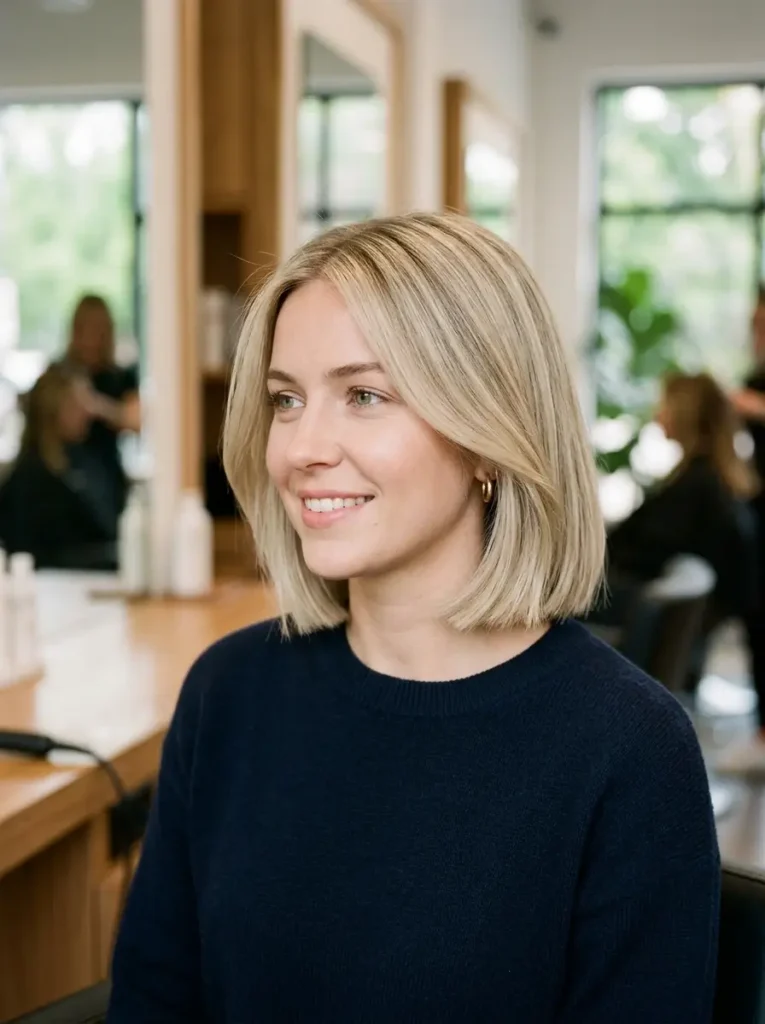
A blunt bob is one of the most effective haircuts for fine hair because it creates a strong, clean line at the ends. Instead of making the hair look wispy, the blunt edge gives the illusion of density. This haircut usually sits around the chin or just below it, making the hair look fresh, healthy, and polished. The vibe is modern, simple, and confident, which makes it easy to wear for work, casual days, or dressier occasions.
This haircut suits oval, heart, square, and long face shapes, especially when the length is adjusted carefully. Maintenance is moderate because the clean edge needs regular trims to stay sharp. Style it with a round brush, smoothing cream, or lightweight volumizing mousse. Ask your barber or stylist for a blunt bob with minimal layering and a full bottom line so your fine hair looks thicker.
Long Bob for Fine Hair

A long bob, also called a lob, is a beautiful choice for fine hair because it gives length without letting the hair look too flat. The cut usually falls between the collarbone and shoulders, which makes it easy to style straight, wavy, or softly curled. It works because the shorter length reduces weight, while the fuller ends make the hair appear denser. The look feels stylish, practical, and easy to maintain.
This haircut suits most face shapes, including round, oval, square, and heart-shaped faces. Maintenance is low to moderate because it grows out softly but still needs trims to keep the ends full. Use root spray, mousse, or texture mist for lift. Ask your stylist for a collarbone-length lob with a blunt or slightly textured edge, avoiding too many layers that can make fine hair look thin.
Shoulder-Length Blunt Cut

A shoulder-length blunt cut is a great option if you want to keep some length while making fine hair look thicker. The hair sits around the shoulders with a strong bottom line, which helps the ends look fuller. This style works because fine hair can lose volume when it gets too long, but shoulder-length hair keeps it light enough to move. The result is simple, healthy-looking, and flattering.
This haircut suits oval, round, square, and heart-shaped faces. It works well for fine, straight or slightly wavy hair. Maintenance is moderate because the ends need trimming every few weeks to avoid a thin look. Use a lightweight shine spray, volumizing mousse, or heat protectant before styling. Ask your stylist for a shoulder-length blunt cut with very soft internal shaping only if your hair needs movement.
Textured Bob for Fine Hair

A textured bob adds light movement to fine hair without making it look overly layered. The ends are softly shaped to create body, while the overall cut still keeps fullness. This style works because fine hair often needs texture to avoid looking flat, but too much layering can reduce density. A textured bob gives a relaxed, modern finish that feels fresh and easy.
This haircut suits oval, round, square, and heart-shaped faces. It works best for fine hair that has a little natural wave or can hold soft bends. Maintenance is low to moderate because the texture does not need to look perfect. Use texture spray, light mousse, or dry shampoo for volume. Ask your stylist for a bob with soft texture at the ends while keeping the baseline full and healthy.
Angled Bob for Fine Hair

An angled bob is slightly shorter in the back and longer in the front. This shape gives fine hair structure and creates the appearance of more volume around the face. It works because the angle makes the haircut look intentional and lifted without needing heavy layers. The style feels sleek, stylish, and slightly bold while still being easy to wear every day.
This haircut suits round, oval, and square face shapes because the longer front pieces can help frame the face. Maintenance is moderate because the angle needs trimming to stay balanced. Style it with a blow-dryer brush, smoothing cream, or root-lifting spray. Ask your stylist for a soft angled bob that keeps the ends full and does not stack the back too heavily if your hair is very fine.
Fine Hair Pixie Cut
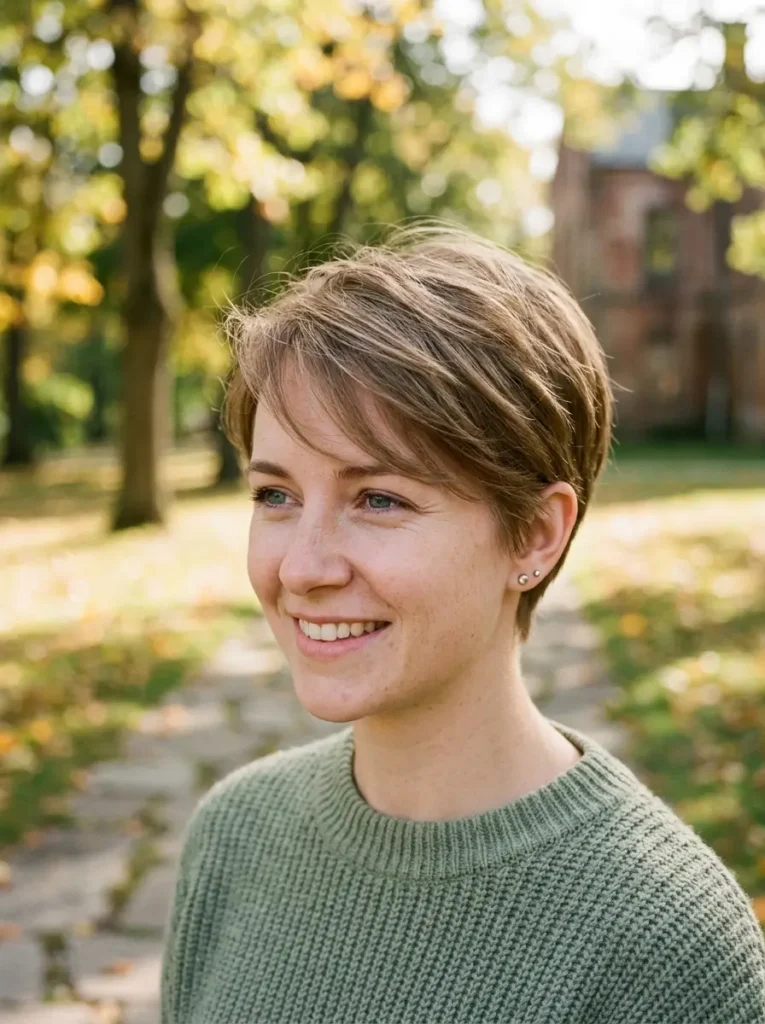
A pixie cut can make fine hair look fuller because the shorter length removes weight and brings attention to shape. Instead of long strands falling flat, a pixie creates lift at the crown and texture around the face. This haircut works well for people who want a low-fuss style with personality. The vibe can be soft, chic, edgy, or feminine depending on the finish.
This haircut suits oval, heart, square, and petite face shapes, but it can be customized for many features. Maintenance is moderate to high because shortcuts need regular trims to hold their shape. Use lightweight styling paste, mousse, or texture cream. Ask your barber or stylist for a pixie with soft texture and enough length on top to create movement without making the hair look sparse.
Layered Pixie for Fine Hair
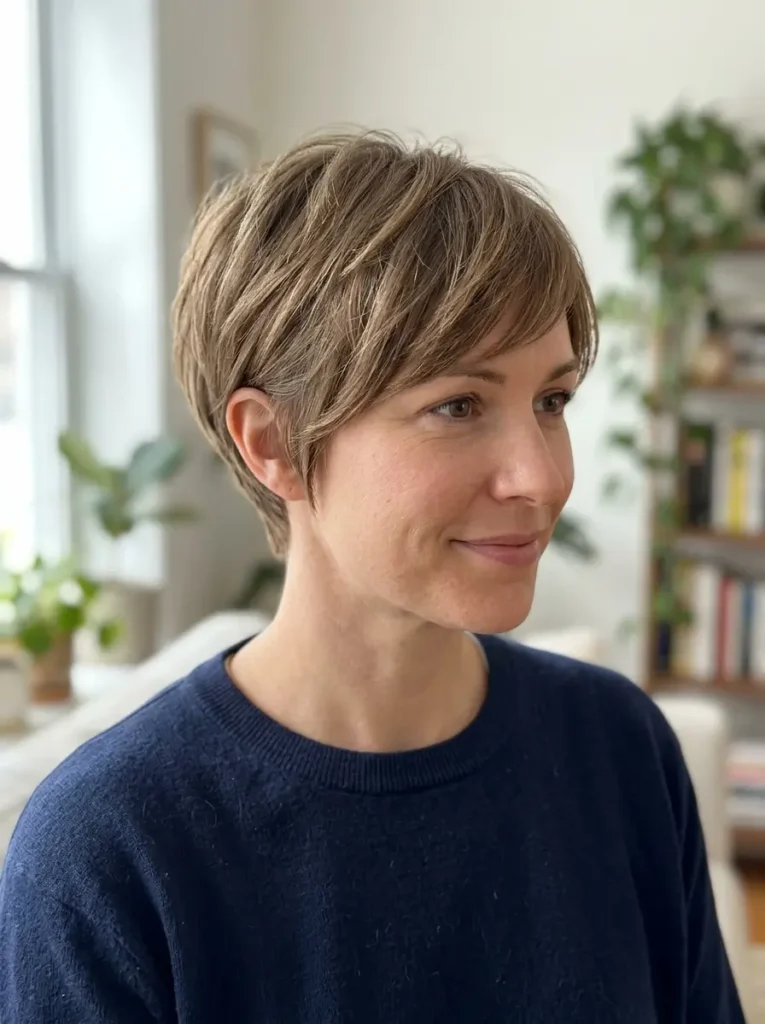
A layered pixie gives fine hair more shape and movement than a classic short crop. The layers are placed carefully so the hair looks lifted, not thin. This style works because fine hair often benefits from shorter pieces around the crown, which can create natural height. It has a modern, playful, and easygoing feel that can be styled neatly or tousled.
This haircut suits oval, heart, and square face shapes. It works especially well for fine hair that needs lift at the roots. Maintenance is moderate because the layers need refreshing to avoid losing shape. Use a small amount of texture paste, root powder, or lightweight mousse. Ask your stylist for a layered pixie with soft crown volume and clean edges around the ears and neckline.
Chin-Length Bob with Side Part

A chin-length bob with a side part creates instant fullness and face-framing shape. The side part adds lift at the roots, while the chin-length cut keeps the ends looking strong. This hairstyle works because fine hair often looks fuller when it is not weighed down by too much length. The side part also gives the cut a soft, elegant look without requiring bangs.
This haircut suits round, oval, heart, and square face shapes. It is especially helpful for anyone who wants more volume on top. Maintenance is moderate because the length needs regular trims to stay clean. Use volumizing spray, mousse, or dry shampoo at the roots. Ask your stylist for a chin-length bob with a side part and a full edge that makes your fine hair look thicker.
Collarbone Cut for Fine Hair

A collarbone cut is a flattering mid-length haircut that works beautifully for fine hair. It is long enough to tie back but short enough to avoid looking limp. The hair usually falls around the collarbone, creating a soft and feminine shape. This haircut works because it keeps enough weight at the ends while allowing movement around the shoulders.
This style suits most face shapes and works well for straight, slightly wavy, and fine hair. Maintenance is low to moderate because it grows out naturally. Use a round brush, root-lifting spray, or lightweight wave mousse for the body. Ask your stylist for a collarbone-length cut with a full bottom line and soft face-framing only if needed. Avoid heavy layers if you want the thickest-looking finish.
Soft Layered Cut for Fine Hair

A soft, layered cut can work for fine hair when the layers are gentle and carefully placed. The goal is to add movement without removing too much density from the ends. This haircut works because soft layers can stop fine hair from looking flat while keeping the overall shape full. The vibe is natural, easy, and feminine.
This haircut suits oval, heart, round, and long face shapes. It is best for fine hair that has enough density to support light layering. Maintenance is low to moderate because soft layers grow out smoothly. Use volumizing mousse, blow-dry spray, or light texture mist. Ask your stylist for subtle layers that begin lower in the hair and keep the bottom line thick, not heavily thinned or feathered.
Curtain Bangs with Fine Hair

Curtain bangs can make fine hair look more styled by adding shape around the face. They part softly in the center and sweep to both sides, creating movement without taking over the haircut. This style works because it adds interest near the front while allowing the rest of the hair to stay fuller. Curtain bangs can be paired with bobs, lobs, shoulder-length cuts, or longer fine hair.
This look suits round, oval, heart, and square face shapes. Maintenance is moderate because bangs need trims more often than the rest of the hair. Style them with a round brush, blow-dryer brush, or lightweight spray. Ask your stylist for soft curtain bangs that are not too thick, so they do not steal too much density from the sides of your fine hair.
Fine Hair Shag Cut
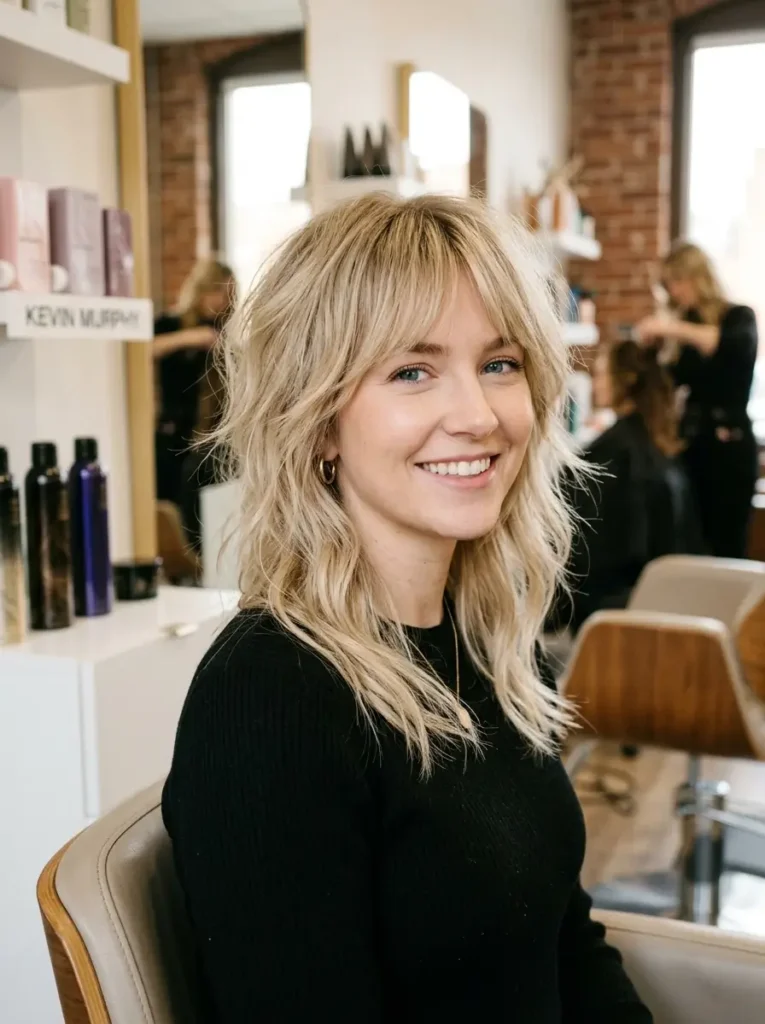
A shag cut for fine hair should be soft, light, and balanced. It uses layers and texture to create movement, but the cut must avoid making the ends look too thin. This hairstyle works because it gives fine hair a cool, effortless shape with volume around the crown. The vibe is modern, relaxed, and slightly edgy without needing perfect styling.
This haircut suits oval, heart, long, and square face shapes. It works best for fine hair with natural waves or enough density for light layering. Maintenance is moderate because the shape needs regular trims. Use texture spray, mousse, or dry shampoo for lift. Ask your stylist for a soft, fine-hair shag with gentle crown layers, face-framing pieces, and enough fullness left at the bottom.
Bixie Cut for Fine Hair
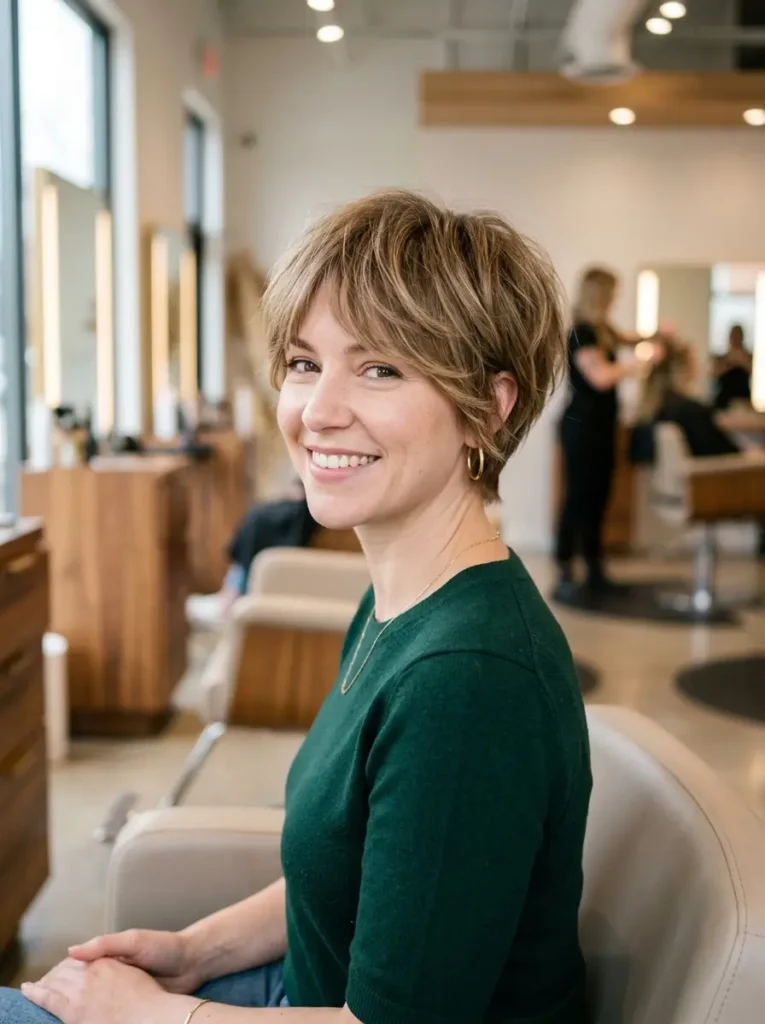
A bixie cut is a mix between a bob and a pixie. It gives fine hair the lift of a short cut with a little more softness and length than a pixie. This style works because it adds shape around the crown and face while keeping the hair light. It is a great option if you want a fresh change but are not ready for a very short pixie.
This haircut suits oval, heart, square, and petite face shapes. Maintenance is moderate because the shape needs trims to stay balanced. Use light styling cream, texture spray, or mousse for the body. Ask your stylist for a bixie with soft layers, volume at the crown, and enough length around the face to flatter your features. Avoid overly thinned ends if your hair is very fine.
Blunt Cut with Face-Framing Pieces

A blunt cut with face-framing pieces gives fine hair the best of both worlds. The blunt ends make the hair look fuller, while the front pieces add softness around the face. This haircut works because it keeps density where fine hair needs it most, at the bottom, while still creating a flattering shape. The look is polished, simple, and easy to style.
This style suits round, oval, square, and heart-shaped faces. It works well for fine, straight or slightly wavy hair. Maintenance is moderate because the blunt edge needs trimming to stay fresh. Use smoothing cream, root spray, or a light wave product. Ask your stylist for a full blunt baseline with soft face-framing pieces that do not remove too much hair from the front.
Short Bob with Micro Layers

A short bob with micro layers uses very small, subtle layers to create movement without making fine hair look thin. The cut stays clean and full, but the tiny layers help the hair avoid looking flat. This style works because fine hair often needs a little movement, but obvious layers can reduce fullness. Micro layers give a soft, natural lift.
This haircut suits oval, round, heart, and square face shapes. It works best for fine hair that is straight or slightly wavy. Maintenance is moderate because short bobs need regular shaping. Use volumizing spray, dry shampoo, or lightweight styling cream. Ask your stylist for a short bob with micro layers or hidden texture, while keeping the ends full and avoiding heavy thinning shears.
Long Fine Hair with Blunt Ends

Long, fine hair can look beautiful when the ends are kept blunt and healthy. Instead of adding many layers, this haircut focuses on a clean bottom line that makes the length look fuller. It works because fine hair can appear sparse when the ends are uneven or over-layered. A blunt finish gives long hair a smoother, thicker-looking shape.
This hairstyle suits oval, long, heart, and round face shapes. Maintenance is moderate because long, fine hair needs healthy ends to look full. Use lightweight conditioner, heat protectant, and a small amount of shine spray. Avoid heavy oils near the roots. Ask your stylist for long hair with blunt ends and very minimal face-framing if needed, keeping as much density as possible.
Fine Hair Bob with Soft Waves

A fine hair bob with soft waves looks fuller, relaxed, and feminine. The waves create movement and make the hair appear thicker by adding width and texture. This style works because fine hair often looks better with gentle bends instead of lying completely flat. The bob length keeps the ends strong, while the waves add body.
This hairstyle suits round, oval, square, and heart-shaped faces. It works best for fine hair that can hold a wave or has natural movement. Maintenance is low to moderate because the waves do not need to be perfect. Use mousse, heat protectant, and a large curling wand or the heatless wave method. Ask your stylist for a bob that keeps fullness at the ends and supports soft, natural-looking waves.
How to Choose the Best Haircuts for Fine Hair for Your Face Shape
Choosing the best haircuts for fine hair starts with your face shape. Fine hair needs shape and fullness, but the placement of volume should flatter your features.
For round faces, cuts that add length and lift are usually flattering. A long bob, angled bob, collarbone cut, or side-parted bob can help create a longer look. Keep fullness below the chin rather than adding too much width at the cheeks.
For oval faces, many fine-hair cuts work well. You can wear a blunt bob, pixie, lob, soft layers, curtain bangs, or shoulder-length cut. Since oval faces are balanced, focus more on hair density, lifestyle, and styling time.
For square faces, soft edges and movement can help balance a strong jawline. A textured bob, collarbone cut, curtain bangs, or soft layered cut can look beautiful. Avoid very harsh cuts that stop exactly at the widest part of the jaw if you want a softer effect.
For heart-shaped faces, styles that balance the forehead and chin are helpful. Curtain bangs, chin-length bobs, lobs, and face-framing pieces can work well. A little fullness near the jawline can make the face look more balanced.
For long or rectangular faces, cuts that add width and softness are usually best. A blunt bob, shoulder-length cut, curtain bangs, soft waves, or a shag-inspired cut can help. Avoid extra-long fine hair with no layers or bangs if it makes the face look longer.
How to Choose the Best Haircuts for Fine Hair for Your Hair Type
Straight fine hair often benefits from blunt ends, bobs, lobs, pixie cuts, and collarbone cuts. Straight strands can show thin ends easily, so keeping the bottom line clean is important. Use root-lifting products to avoid flatness.
Wavy fine hair can look fuller with soft bobs, textured lobs, fine-hair shags, and shoulder-length cuts. The natural wave adds movement, but the layers should not be too heavy. Lightweight mousse or wave spray can help the texture stay soft.
Curly, fine hair needs shape without too many layers. Soft curly bobs, shoulder-length curls, and light face-framing can work well. Use lightweight curl cream or mousse instead of thick butter-like products that weigh curls down.
Thick fine hair may sound confusing, but it means many strands that are individually fine. This hair type can handle more shape than thin, fine hair. A lob, soft layers, or a textured bob can reduce heaviness while still looking full.
Thin, fine hair needs the most careful cutting. Avoid too many layers, heavy bangs, or very long lengths that make the ends look sparse. Blunt bobs, pixies, lobs, and shoulder-length blunt cuts often create the fullest appearance.
Fine hair, in general, needs lightweight styling. Heavy creams, oils, waxes, and thick conditioners can make it look greasy or flat. Choose products that add lift, texture, and light hold without coating the hair too much.
Styling and Maintenance Tips
- Trim fine hair every six to ten weeks to keep the ends full and healthy.
- Choose blunt or lightly textured ends if your hair looks thin at the bottom.
- Use volumizing shampoo if your roots become flat quickly.
- Apply conditioner mainly from the mid-lengths to the ends, not directly on the scalp.
- Avoid heavy masks too often because they can weigh fine hair down.
- Use lightweight mousse, root spray, or thickening spray before blow-drying.
- Blow-dry the roots upward for more lift.
- Use a round brush for bobs, lobs, and curtain bangs.
- Try dry shampoo at the roots for extra volume between washes.
- Use heat protectant before curling, straightening, or blow-drying.
- Keep heat tools on a moderate setting because fine hair can be damaged easily.
- Add soft waves to make fine hair look fuller and more textured.
- Avoid applying oils or serums near the roots.
- Use a small amount of shine product only on the ends if needed.
- Sleep on a silk or satin pillowcase to reduce friction and breakage.
- Avoid tight hairstyles that pull on delicate, fine strands.
- Bring reference photos to your barber or stylist showing the length, shape, and fullness you want.
Comparison Table
| Hairstyle | Best For | Hair Type | Maintenance | Styling Product |
| Blunt Bob | Fuller ends | Straight, fine, thin | Medium | Smoothing cream |
| Long Bob | Easy volume | Fine, straight, wavy | Low to medium | Root spray |
| Shoulder-Length Blunt Cut | Keeping length | Fine, medium, straight | Medium | Volumizing mousse |
| Textured Bob | Soft movement | Fine, wavy, straight | Low to medium | Texture spray |
| Angled Bob | Face framing | Fine, straight, medium | Medium | Blow-dry spray |
| Pixie Cut | Root lift | Fine, thin, straight | Medium to high | Texture paste |
| Layered Pixie | Crown volume | Fine, straight, wavy | Medium | Root powder |
| Chin-Length Bob | Instant fullness | Fine, straight, wavy | Medium | Dry shampoo |
| Collarbone Cut | Longer fine hair | Fine, straight, wavy | Low to medium | Lightweight mousse |
| Soft Layered Cut | Gentle movement | Fine, medium density | Low to medium | Blow-dry spray |
| Curtain Bangs | Face framing | Fine, straight, wavy | Medium | Light hairspray |
| Fine Hair Shag | Texture and lift | Fine, wavy, medium | Medium | Texture spray |
| Bixie Cut | Short volume | Fine, straight, wavy | Medium | Styling cream |
| Blunt Cut with Face-Framing | Fullness and softness | Fine, straight, wavy | Medium | Root-lifting spray |
| Bob with Micro Layers | Hidden movement | Fine, straight, wavy | Medium | Volumizing spray |
| Long Hair with Blunt Ends | Full-looking length | Fine, straight | Medium | Heat protectant |
| Bob with Soft Waves | Thicker-looking texture | Fine, wavy, straight | Low to medium | Wave mousse |
Common Mistakes to Avoid
One common mistake is choosing haircuts for fine hair only because they are trending. A haircut may look beautiful in a photo, but it still needs to match your face shape, hair density, texture, and daily routine. Fine hair usually needs a cut that protects fullness instead of removing too much weight.
Another mistake is ignoring hair texture. Fine hair can be straight, wavy, curly, thick in density, or thin in density. A shag may work for someone with fine but dense hair, while the same cut may make thin fine hair look sparse. The cut should match how your hair naturally behaves.
Using too much product is also a major mistake. Fine hair gets weighed down faster than coarse hair. Heavy oils, thick creams, waxes, and strong gels can make the hair look greasy or flat. Start with lightweight products and use a small amount.
Not showing reference photos can lead to confusion. Words like “layers,” “texture,” and “volume” can mean different things to different stylists. Bring photos that show the shape, length, and amount of layering you want. It is also helpful to show photos of styles you do not like.
Another mistake is asking for too many layers. Layers can add movement, but too many can make fine hair look thinner at the ends. Keep the bottom line fuller if your goal is thicker-looking hair.
Finally, do not skip trims. Fine hair can show split ends and uneven edges quickly. Regular trims keep the haircut fresh and help the ends look stronger.
FAQs
What are the best haircuts for fine hair?
The best haircuts for fine hair include blunt bobs, long bobs, pixie cuts, collarbone cuts, and shoulder-length blunt cuts. These styles help the ends look fuller and reduce flatness. The best choice depends on your face shape, density, and styling routine.
Should fine hair have layers?
Fine hair can have layers, but they should be soft and minimal. Too many layers can make the ends look thinner. Light face-framing or hidden layers often work better than heavy layering.
Does short hair make fine hair look thicker?
Shorter hair can make fine hair look thicker because it removes weight and keeps the ends stronger. Bobs, pixies, and lobs are great options. The cut should still be shaped carefully so it does not look flat.
What haircut gives fine hair the most volume?
A blunt bob, layered pixie, textured bob, or collarbone cut can give fine hair more volume. Root-lifting products and blow-drying techniques also help. Avoid very long lengths if they make your hair look limp.
Are bangs good for fine hair?
Bangs can work for fine hair if they are not too heavy. Curtain bangs, wispy bangs, and soft side bangs are usually the easiest choices. Very thick bangs may take too much hair from the sides or crown.
Is long hair bad for fine hair?
Long hair is not bad for fine hair, but it can look thinner if the ends are weak or over-layered. A blunt finish can help long, fine hair look fuller. Regular trims and lightweight products are important.
What products are best for fine hair?
Lightweight mousse, root spray, dry shampoo, thickening spray, and heat protectant are good for fine hair. Avoid heavy oils and thick creams near the roots. Use only a small amount of product at a time.
How often should fine hair be trimmed?
Fine hair usually looks best with trims every six to ten weeks. Regular trims keep the ends full and prevent split ends from showing. Shortcuts may need trims more often to keep their shape.
Can fine hair be thick?
Yes, fine hair can be thick if you have many fine strands. Fine describes the size of each strand, while thick describes density. Thick fine hair can usually handle more layers than thin fine hair.
What should I ask my stylist for?
Ask your stylist for a haircut that keeps fullness at the ends and adds volume where needed. Bring photos showing the exact length and shape you want. Also, ask which layers or bangs will work best with your natural texture.
Conclusion
Haircuts for fine hair can make a big difference in how full, fresh, and stylish your hair looks. The right cut can create stronger ends, better movement, and more volume without needing heavy products. Whether you prefer a blunt bob, long bob, pixie cut, collarbone cut, or soft layered style, fine hair can look beautiful with the right shape.
If your goal is thicker-looking hair, choose cuts that keep the bottom line full. Blunt bobs, shoulder-length cuts, and lobs are great options. If you want more lift, try a pixie, bixie, textured bob, or soft curtain bangs. If you prefer longer hair, keep the ends blunt and avoid too many layers.
Before your next appointment, think about your face shape, hair density, texture, and daily styling habits. Bring reference photos and ask your barber or stylist how the cut will look when styled at home. With the right haircut and simple care routine, fine hair can look fuller, healthier, and easier to manage every day.