What Is a Bond in Hairstyle? Complete Guide
Hair talk can feel confusing sometimes, right? So many terms, so many techniques, and suddenly you hear “bond” and wonder what that even means. If you’ve ever sat in a…
Hair talk can feel confusing sometimes, right? So many terms, so many techniques, and suddenly you hear “bond” and wonder what that even means. If you’ve ever sat in a salon chair or scrolled through hair videos and heard this word, you’re not alone.
Let’s break it down in a simple, friendly way, so it actually makes sense. No complicated salon language, just real talk.
What Does “Bond” Mean in Hairstyling?
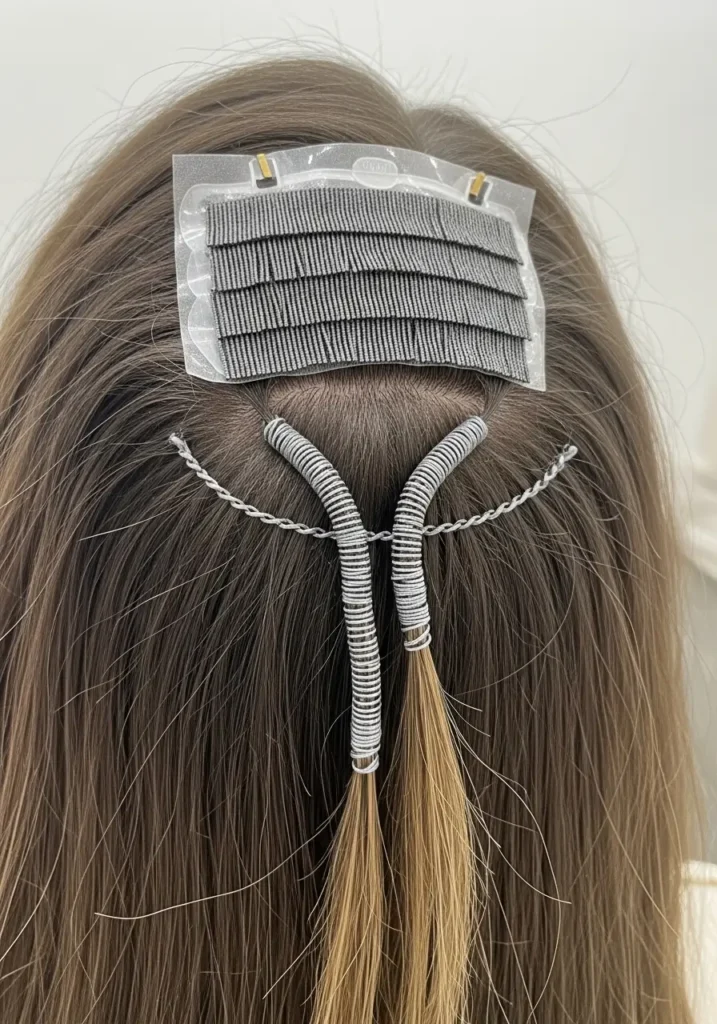
“Bond” in hairstyling is basically how something is attached to your natural hair.
Think of it like this: when extra hair or a styling element is added, something has to hold it in place. That “something” is the bond. It could be glue, adhesive, keratin, or another method that connects the added hair to your real strands.
Bond = connection point.
It’s not just about sticking hair on. It’s about creating a hold that looks natural and stays in place for a certain amount of time. Some bonds last a few days, while others stay for weeks.
Stylists use bonding for:
- Adding length
- Creating volume
- Filling thin areas
- Trying new looks without cutting or coloring
So anytime you hear “bond,” just think of it as the link between your hair and whatever is being added.
Types of Hair Bonding
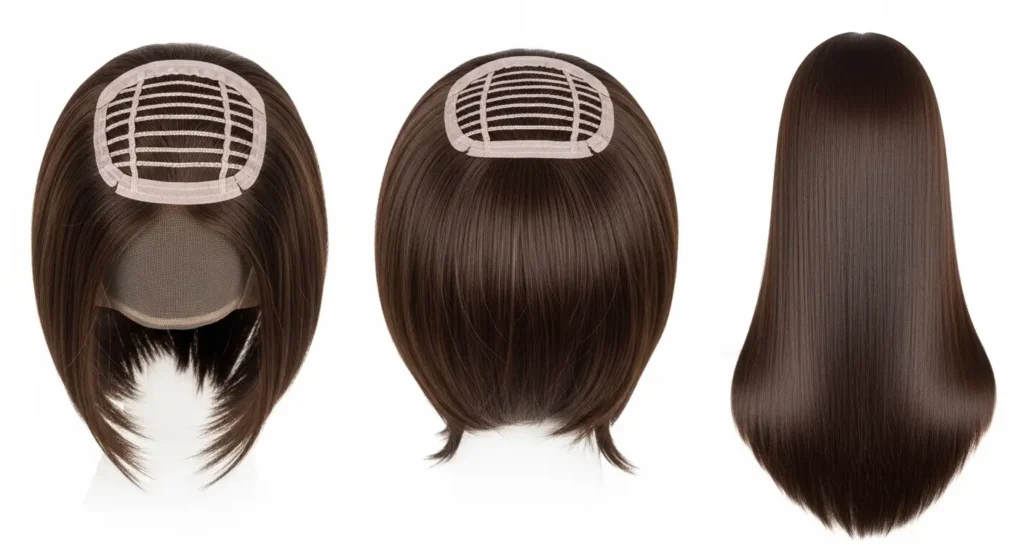
Hair bonding isn’t just one single thing. There are a few different types, and each one works in its own way. Let’s go through them like we’re chatting at a salon.
Temporary Hair Bonding
Temporary bonding is perfect for short-term looks.
This method usually uses hair glue or adhesive that holds extensions in place for a few days or up to a couple of weeks. It’s often used for events, parties, or just trying something new without a long commitment.
It’s quick, affordable, and easy to remove.
Many people love this option because:
- No long-term commitment
- Easy to switch styles
- Budget-friendly
But it does need care. Too much pulling or oil near the bond can make it loosen faster.
Permanent Hair Bonding
Permanent bonding lasts longer and feels more secure.
This method uses stronger materials like keratin or heat-fused bonds. Stylists attach extensions strand by strand, which makes the result look very natural.
It can last several weeks or even months if taken care of properly.
This type is great if you:
- Want long-lasting length
- Prefer a fuller everyday look
- Don’t want frequent salon visits
It does require more maintenance and usually needs a professional for both application and removal.
Hair Extension Bonding
Extension bonding is the most common type people talk about.
This includes both temporary and long-lasting methods where extra hair is attached to natural hair. It can be done using glue, clips, tape, or keratin bonds.
It’s popular because it gives instant results. One appointment and your hair looks completely different.
People choose extension bonding for:
- Volume boost
- Longer hair instantly
- Styling flexibility
Different methods work better for different hair types, so it’s always a good idea to match the method to your lifestyle.
How Hair Bonding Works
Let’s picture what actually happens during bonding.
First, hair is sectioned into small parts. This helps keep everything neat and evenly placed. Then the stylist applies the bonding material close to the root area (but not directly on the scalp).
After that, extension hair is attached and pressed or fused into place.
Depending on the method, this step might involve:
- Glue or adhesive
- Heat tools
- Keratin bonds
Once everything is attached, hair is styled to blend the extensions with natural strands.
The result should look seamless. No one should be able to tell where your real hair ends and the extensions begin.
The process may sound technical, but when done by someone experienced, it feels pretty smooth and quick.
Benefits of Hair Bonding
Hair bonding is loved for so many reasons, especially if you enjoy changing your look without big commitments.
First, it gives instant results. No waiting months for hair to grow. You walk in with one style and walk out with another.
Second, it adds volume. Thin or flat hair suddenly looks fuller and more lively.
Third, it allows styling freedom. Want long waves today and a sleek look tomorrow? Bonded hair makes that easier.
Another benefit is confidence. When your hair looks good, you just feel better. It’s that simple.
Also, bonding can be more affordable compared to other hair treatments, especially temporary options.
It’s a quick glow-up that fits into everyday life.
Hair Bonding vs Rebonding
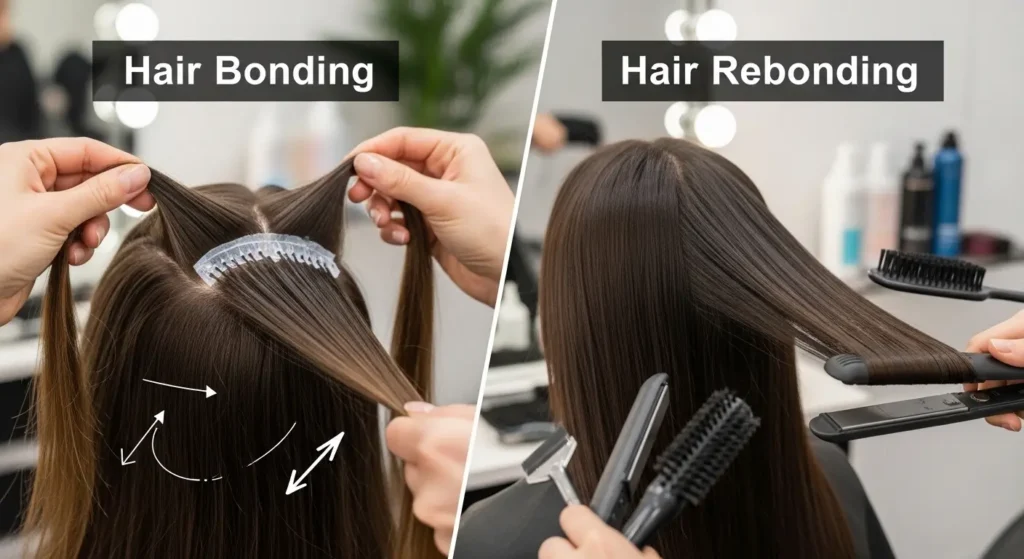
These two sound similar, but they’re completely different things.
Hair bonding is about attaching extra hair or extensions.
Hair rebonding is a chemical process that straightens your natural hair permanently.
Bonding = adding hair
Rebonding = changing your natural hair texture
Rebonding uses chemicals to break and reset hair structure, making it straight and smooth. Bonding doesn’t change your natural hair shape. It just adds to it.
If you want longer or fuller hair, bonding is your choice.
If you want straight hair, rebonding is the option.
Knowing this difference saves you from a lot of confusion at the salon.
Is Hair Bonding Safe?
Hair bonding is generally safe when done properly. But like anything involving your hair, it needs care and attention.
Good results depend on:
- Quality products
- Skilled application
- Proper aftercare
Problems usually happen when:
- Too much glue is used
- Bonds are placed incorrectly
- Extensions are removed roughly
These can lead to hair breakage or scalp irritation.
So choosing an experienced stylist really matters. It’s not something you want done carelessly.
Also, giving your hair breaks between bonding sessions helps keep it healthy.
How Long Does Hair Bonding Last?
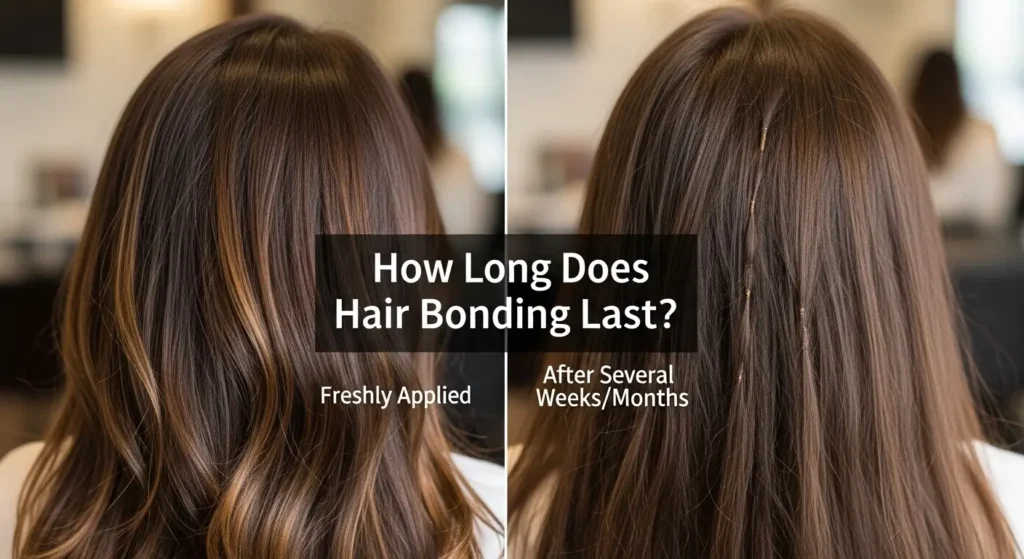
How long bonding lasts depends on the type used and how well you take care of it.
Temporary bonding can last from a few days to two weeks.
Long-lasting bonding can stay for 4 to 8 weeks, sometimes longer, with good care.
Things that affect how long it lasts:
- Hair type
- Daily routine
- Products used
- Heat styling
An oily scalp or frequent washing can make bonds loosen faster.
Gentle care keeps everything looking fresh for longer.
Hair Bonding Aftercare Tips
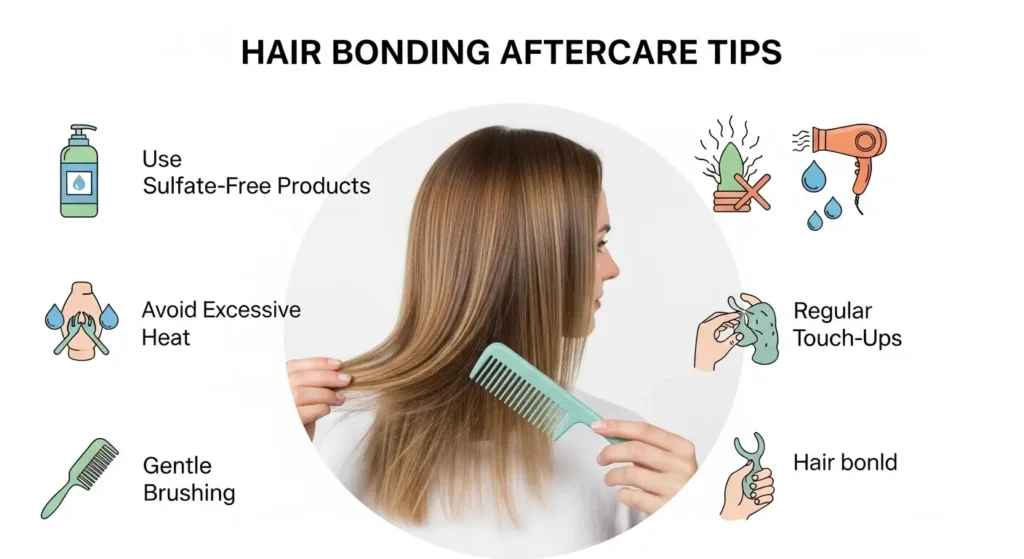
Aftercare is where everything really matters. Good habits can make your bonded hair look amazing for longer.
Start with gentle washing. Use mild shampoo and avoid rubbing too hard near the bonded areas.
Avoid heavy oils near the roots. Oil can weaken the adhesive and cause slipping.
Sleep care is important too. Tie your hair loosely or braid it before bed to prevent tangling.
Brushing should be soft and careful. Always start from the ends and work your way up.
Heat styling is okay, but try not to apply heat directly to the bonds.
Regular maintenance keeps your hair looking neat and prevents damage.
Little habits make a big difference here.
Conclusion
Hair bonding is one of those beauty tricks that can completely change your look without long-term stress. It’s all about attaching extra hair in a way that looks natural and feels comfortable.
From short-term styles to longer-lasting transformations, bonding gives you options. You can go subtle or dramatic, depending on your mood.
Understanding how bonding works, the types available, and how to care for it helps you make better choices. It also keeps your natural hair safe and healthy.
If you’ve been thinking about trying something new with your hair, bonding can be a fun way to switch things up. Just remember to keep it gentle, take care of your strands, and enjoy the process.