
Best Blunt Bob Haircut Ideas for a Chic and Modern Look Today
Blunt bob haircuts remain popular because they create a clean, confident shape with very little visual clutter. Unlike heavily layered cuts, a blunt bob keeps most of the ends at one length, helping the hair look thicker, healthier, and more polished.
This haircut can help women with fine or thin-looking ends because its strong perimeter creates the appearance of greater density. It also works for thick hair when internal weight is removed carefully without weakening the outer line. Straight hair shows the precision clearly, while waves and curls can soften the structured shape.
A blunt bob can sit near the cheekbones, jawline, chin, neck, shoulders, or collarbone. Small changes to the length, fringe, parting, texture, and styling can make it look classic, edgy, feminine, relaxed, or highly polished.
In this guide, you will discover 17 blunt bob haircut ideas for a chic and modern look today. You will also learn how to choose the right length for your face shape and hair type, style the haircut at home, avoid common mistakes, and explain your preferred result clearly to your hairstylist.
Quick Answer
The best blunt bob haircuts include chin-length bobs, jaw-length cuts, sleek center-part styles, textured bobs, and longer collarbone versions.
A strong one-length perimeter can make fine or thin-looking hair appear fuller and healthier.
Straight hair shows the sharp line clearly, while waves and curls give the cut a softer finish.
Choose the length, parting, and fringe according to your face shape, natural texture, and maintenance routine.
Table of Contents
- Best Blunt Bob Haircut Ideas for a Chic and Modern Look
- How to Choose a Blunt Bob for Your Face Shape
- How to Choose a Blunt Bob for Your Hair Type
- Styling and Maintenance Tips
- Blunt Bob Comparison Table
- Common Mistakes to Avoid
- Frequently Asked Questions
- Conclusion
Best Blunt Bob Haircut Ideas for a Chic and Modern Look Today
Classic Chin-Length Blunt Bob

The classic chin-length blunt bob creates a strong, even line that frames the lower face and highlights the jaw. Its compact shape feels fresh, polished, and timeless without relying on visible layers. Keeping the ends at one length makes the haircut appear dense and intentional. It can be worn smooth for a refined finish or slightly tousled for a softer everyday look. The chin-length placement also keeps the neckline open and makes earrings or statement collars more noticeable.
This haircut suits straight, slightly wavy, fine, and medium-density hair. Maintenance is moderate because the sharp line usually needs trimming every six to eight weeks. Apply lightweight volumizing mousse before blow-drying with a flat or round brush. Curve the ends gently inward if you want a softer shape. Ask your stylist for a true chin-length bob with minimal layering and a strong perimeter. Explain whether you prefer the front to sit exactly at the chin or slightly below it after drying.
Sleek Middle-Part Blunt Bob

A sleek middle-part blunt bob creates a symmetrical, modern shape that draws attention to the cheekbones, eyes, and jawline. The center part emphasizes the precision of the haircut, while smooth styling keeps the ends looking clean and dense. This style has an editorial quality but remains wearable for work, social events, and daily life. A slight inward curve at the ends can soften the structure, while a completely straight finish creates a sharper statement.
This bob works best for straight, fine, medium, or lightly thick hair. Maintenance is moderate because both sides must remain balanced and the perimeter needs regular trimming. Apply heat protectant and a lightweight smoothing lotion before blow-drying. Use a flat iron only when necessary and keep the temperature moderate. Ask your stylist to cut the bob according to your natural center part and check both sides after the hair is dry. Request minimal internal movement so the ends remain full without looking stiff.
Jaw-Length Blunt Bob

The jaw-length blunt bob ends near the strongest part of the lower face, creating a bold and confident outline. It feels slightly shorter and more graphic than a chin-length cut. The compact shape can make the neck look longer and bring attention to facial features. Because the ends form one solid line, the haircut can make fine hair appear thicker. It also gives naturally straight hair a clean, modern finish that does not require elaborate styling.
This style suits oval, heart-shaped, long, and balanced faces, although the length can be adjusted for other shapes. It works best with straight, fine, or medium-textured hair. Maintenance is medium to high because the precise length needs trimming every five to seven weeks. Use root-lifting spray to prevent the top from looking flat. Ask your stylist for a jaw-skimming perimeter with no visible graduation. Discuss whether you want the ears exposed, partially covered, or easy to reveal by tucking the sides back.
Collarbone Blunt Bob
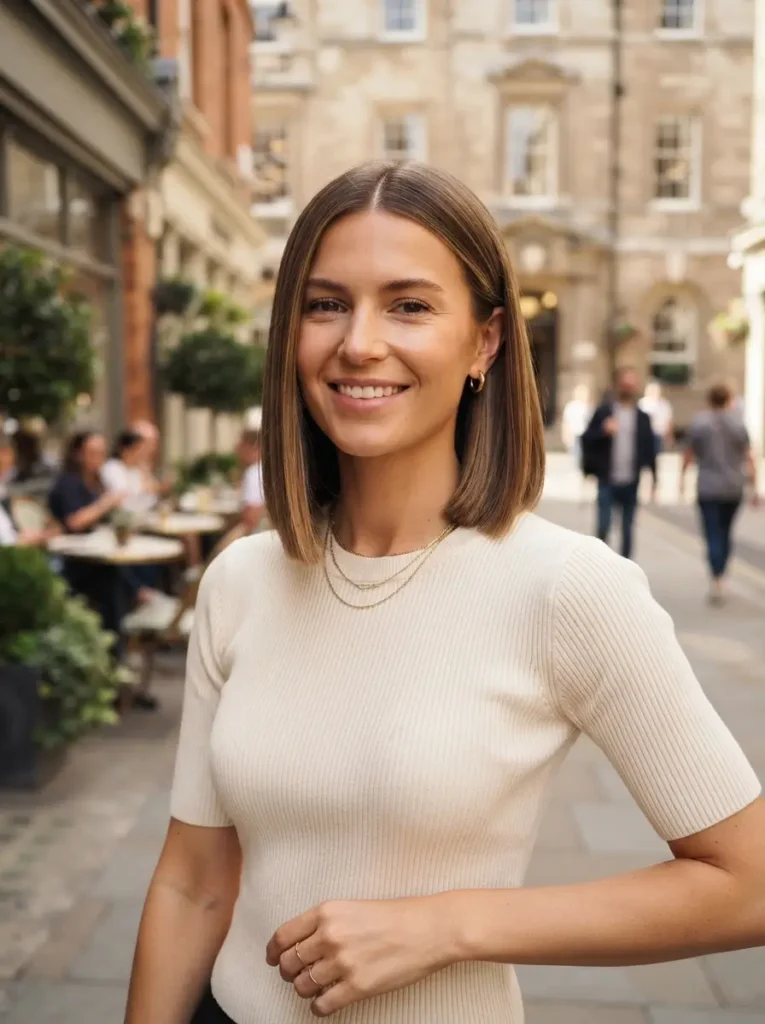
The collarbone blunt bob offers a longer and more flexible version of the classic shape. The ends sit near the collarbones, creating a strong line while preserving enough length for ponytails, clips, and loose updos. It removes the heaviness of very long hair without feeling dramatically short. The solid perimeter helps the lower section look fuller, while the length creates natural movement around the shoulders. This style can appear smooth, softly waved, or casually air-dried.
This haircut suits straight, wavy, fine, medium, and thick hair. Maintenance is low to moderate because the longer line can usually go eight to ten weeks between trims. Use a lightweight smoothing serum through the ends or volumizing spray near the roots. Ask your stylist for collarbone-skimming length with minimal layers and a full perimeter. Fine hair should avoid heavy face framing, while thick hair may need hidden internal weight removal. Mention whether you frequently tie your hair back before choosing the final length.
Short French Blunt Bob

The short French blunt bob usually falls between the cheekbones and jawline, creating a chic, compact shape with a slightly effortless finish. It may be paired with short bangs, wispy fringe, or a natural center part. Although the perimeter remains strong, the styling does not need to look perfectly polished. Slight bends and natural texture give the haircut a relaxed Parisian-inspired character. The short length also helps remove weight, allowing fine hair to appear more lifted.
This cut suits straight, wavy, fine, and medium-density hair. Maintenance is moderate to high because both the short length and fringe may need trimming every five to seven weeks. Apply light mousse or texture spray and allow the hair to air-dry when possible. Ask your stylist for a cheekbone-to-jaw-length blunt shape with controlled softness at the ends. Avoid excessive razor work if your hair is fine. Discuss the fringe carefully, especially if you have cowlicks or prefer minimal morning styling.
Blunt Bob with Curtain Bangs

A blunt bob with curtain bangs combines a strong lower line with soft movement around the forehead and cheekbones. The bangs divide near the center and become longer toward the sides, blending gradually into the bob. This contrast keeps the haircut from feeling too severe while preserving the fullness of the ends. Curtain bangs can also highlight the eyes and create a flattering frame without covering the entire forehead.
This style suits straight, wavy, fine, medium, and thick hair. Maintenance is moderate because the bangs may need reshaping every six to eight weeks. Blow-dry the fringe forward first, then use a round brush to direct it away from the face. Ask your stylist to keep the main bob blunt while adding only enough connection around the front for the bangs to blend naturally. Fine hair should use a narrow fringe section so the sides and perimeter do not lose too much density.
Blunt Bob with Wispy Bangs

A blunt bob with wispy bangs offers a softer alternative to a full, heavy fringe. The bangs are light and slightly separated, allowing part of the forehead to remain visible. This delicate front section contrasts beautifully with the dense, one-length outline of the bob. The combination feels feminine, youthful, and easy to wear. It can soften a strong jawline or add interest to a simple straight haircut without requiring dramatic layering.
This haircut suits fine, straight, and lightly wavy hair. Maintenance is moderate because the fringe may need a quick trim every four to six weeks. Use dry shampoo at the roots of the bangs to prevent them from becoming oily or flat. Ask your stylist to take a narrow section for the fringe and preserve fullness throughout the sides. The bob itself should remain mostly one length. Discuss your natural hairline and cowlicks before choosing the exact width and length of the bangs.
Side-Parted Blunt Bob

The side-parted blunt bob creates instant movement and root lift without changing the one-length structure. Moving more hair to one side gives the front a fuller appearance and introduces gentle asymmetry. The heavier side can sweep across the forehead or tuck behind the ear, while the clean lower edge keeps the haircut polished. This simple styling adjustment can make a classic blunt bob feel softer, more glamorous, and less rigid.
This style suits straight, wavy, fine, and medium-density hair. It is especially useful for hair that becomes flat around a center part. Maintenance is moderate, although the parting itself requires little effort. Apply root-lifting spray near the chosen side and blow-dry in the opposite direction before flipping the hair back. Ask your stylist to cut and check the bob around your preferred part. Mention any cowlicks, and request a strong perimeter with only subtle internal balancing on the heavier side.
Textured Blunt Bob

A textured blunt bob preserves a strong bottom edge while adding light movement through the surface or interior. The haircut still looks dense, but it feels less rigid than a completely smooth one-length bob. Soft bends, separated pieces, and natural texture create a modern, relaxed appearance. This style works well for women who like the fullness of a blunt cut but do not want to wear it perfectly straight every day.
This bob suits straight, wavy, medium, and thick hair. Fine hair can also wear it when the stylist limits texturizing and protects the perimeter. Maintenance is moderate, with trims generally needed every seven to nine weeks. Use lightweight mousse or dry texture spray and create loose bends with a flat iron. Ask your stylist for a blunt outline with subtle internal movement rather than visible short layers. Avoid heavy thinning shears, especially if your ends already look delicate or sparse.
Wavy Blunt Bob

The wavy blunt bob combines a solid haircut outline with soft, natural movement. Waves break up the sharpness of the one-length line, giving the style a relaxed and approachable feeling. The full ends still make the hair appear dense, while the bends create extra width and dimension. This version can look polished with controlled waves or casual with air-dried texture. It works well for everyday wear because the finish does not need to be perfectly uniform.
This haircut suits naturally wavy hair and straight hair that holds a curl. Maintenance is moderate, although the styling can remain simple. Apply lightweight mousse or wave spray to damp hair, then scrunch and air-dry. Ask your stylist for a neck-length or chin-length blunt bob with enough weight to support the waves. Avoid excessive internal thinning, which may make the ends look frizzy. If using heat, create loose alternating bends rather than tight curls for a modern finish.
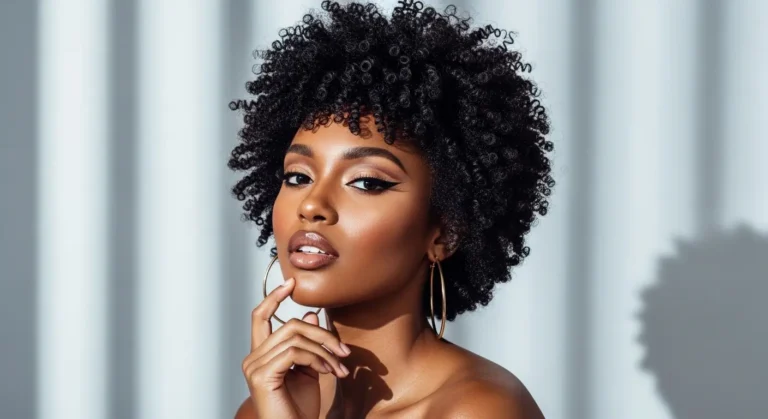
Curly Blunt Bob

A curly blunt bob uses a strong overall perimeter while allowing natural curls to create softness and volume. Unlike a heavily layered curly cut, this shape keeps more weight near the ends, producing a full and rounded appearance. The result can look bold, healthy, and beautifully structured. Because curls do not fall in one perfectly straight line, the blunt effect appears softer than it does on straight hair while still creating a clear silhouette.
This bob suits loose curls, medium curls, coils, and hair with fine-to-medium density. Thick curls may require limited internal shaping to prevent excessive width. Maintenance is moderate, with reshaping every eight to twelve weeks. Apply leave-in conditioner and curl cream to wet hair, then air-dry or diffuse. Ask your stylist to account for shrinkage and assess the perimeter when the curls are dry. Request minimal layering and enough weight to maintain definition without creating a heavy triangular shape.
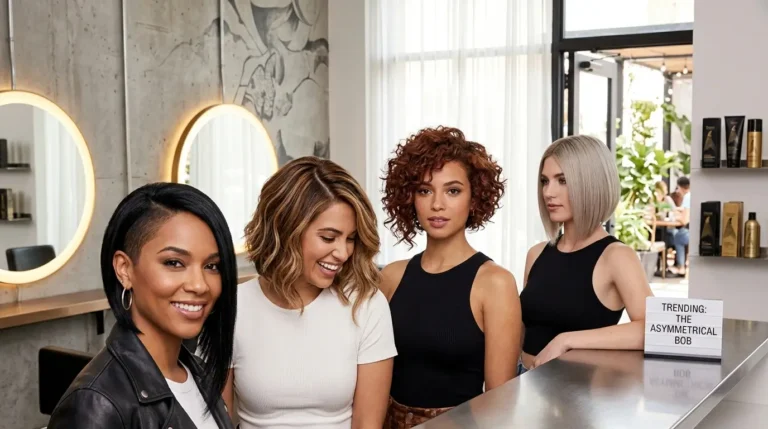
Asymmetrical Blunt Bob

The asymmetrical blunt bob is longer on one side, creating a bold diagonal line while keeping the ends solid and clean. The difference may be subtle for an everyday style or dramatic for a stronger fashion statement. The one-length perimeter makes the asymmetry look intentional and polished. This haircut creates visual movement even when worn completely straight and can highlight the jaw, neck, and cheekbones.
This style suits straight, wavy, fine, medium, and thick hair. Maintenance is high because the difference between the two sides must remain precise. Apply smoothing cream and blow-dry with a flat brush for a clean finish. Ask your stylist to show where each side will end before cutting. Bring front and side reference photos that demonstrate the degree of asymmetry you want. Fine hair should keep a solid perimeter, while thick hair may need hidden internal weight removal to prevent one side from feeling too heavy.
Blunt Bob for Fine Hair

A blunt bob for fine hair focuses on preserving every possible bit of density around the ends. The one-length perimeter creates a thicker-looking outline and prevents delicate strands from becoming wispy. A length between the chin and shoulders often works best because it removes enough weight to improve root lift. The haircut looks simple, but its clean structure can make fine hair appear noticeably fuller, healthier, and more polished.
This style suits fine strands and low-to-medium overall density. Maintenance is moderate because regular trims prevent the ends from looking uneven. Use lightweight mousse, root spray, or volumizing foam rather than heavy oil. Ask your stylist for minimal layering, no aggressive thinning, and a length chosen according to where your hair looks densest. Mention any areas where the scalp becomes visible. A subtle undercut or hidden support may be considered, but the outer perimeter should remain strong.
Blunt Bob for Thick Hair

A blunt bob for thick hair creates a strong outer shape while using hidden techniques to control excess bulk. The visible surface remains smooth and one length, but internal sections may be shortened or carefully shaped underneath. This allows the haircut to maintain its clean perimeter without becoming triangular or overly heavy. The result looks full and polished while feeling lighter and easier to manage.
This haircut suits thick, dense, coarse, straight, and wavy hair. Maintenance is moderate because internal weight gradually returns as the hair grows. Use smoothing cream or anti-frizz serum through the lengths and ends. Ask your stylist to remove weight from inside the haircut rather than thinning the visible surface aggressively. Explain where your hair becomes bulky, such as behind the ears or near the lower back. A slightly longer blunt bob may be easier to control than a very short jaw-length version.
Blunt Bob with Tucked Sides

A blunt bob with tucked sides is a simple styling approach that gives the haircut a neat, modern appearance. One or both sides are placed behind the ears, exposing the cheekbones and making the lower line more visible. The strong perimeter remains the main feature, while the tuck creates a subtle change in shape. This style works especially well with statement earrings, glasses, or a sleek center part.
This option suits jaw-length, chin-length, and neck-length blunt bobs with straight or lightly wavy textures. Maintenance is very low because the haircut provides most of the structure. Apply a small amount of smoothing cream or lightweight wax near the temples if the hair slips forward. Ask your stylist to keep the front pieces long enough to tuck comfortably. Fine hair should preserve fullness around the sides, while thick hair may need discreet internal shaping behind the ears for a smoother fit.
Gray and Silver Blunt Bob

A gray and silver blunt bob combines natural color dimension with a clean, modern shape. White, silver, and darker strands catch the light differently across the strong perimeter, creating texture without additional coloring. The blunt line can make naturally finer gray hair appear denser and more intentional. The style may be worn sleek, softly waved, side-parted, or tucked behind the ears, depending on the desired finish.
This bob suits naturally gray, white, salt-and-pepper, straight, wavy, fine, and medium-density hair. Maintenance is moderate because clean ends help the haircut remain polished. Use moisturizing shampoo and lightweight conditioner to reduce dryness. Purple shampoo may be used occasionally when unwanted yellow tones appear. Ask your stylist for a full perimeter and minimal thinning, especially around areas that have become finer. Choose a length that complements your jaw, glasses, and neckline while remaining easy to style.
Soft Blunt Bob for Mature Women

A soft blunt bob for mature women maintains a full lower edge while avoiding an overly sharp or severe appearance. The perimeter remains strong, but the corners may be softened slightly to create natural movement around the jaw and neck. A gentle side part, wispy fringe, or subtle face framing can make the haircut feel relaxed and flattering. The result looks current, healthy, and easy to wear without appearing heavily layered.
This haircut is especially helpful for fine, thinning, straight, and softly wavy mature hair, although women of every age can wear it. Maintenance is moderate, with trims every six to eight weeks. Use lightweight volumizing mousse at the roots and a small amount of smoothing serum on the ends. Ask your stylist for a full outline, soft corners, and minimal layering. Avoid excessive thinning near the temples, crown, or fringe. The cut should still look balanced when air-dried or styled with limited heat.
How to Choose the Best Blunt Bob Haircut for Your Face Shape
Your face shape can help determine the most flattering length, parting, fringe, and styling finish. However, these suggestions should remain flexible. Your neck length, natural texture, hairline, glasses, and personal preferences also affect the final result.
Women with round faces often benefit from blunt bobs that end below the chin. A neck-length or collarbone version creates vertical movement and may make the face appear longer. A side part can add gentle asymmetry, while a completely rounded chin-length shape may emphasize width.
Oval faces can usually wear most blunt bob lengths. Jaw-length, chin-length, French, collarbone, and asymmetrical versions can all work well. Focus on the features you want to highlight and how much maintenance you are prepared to manage.
Square faces may look balanced with a blunt bob that ends slightly above or below the jaw rather than directly at its widest point. Soft waves, curtain bangs, or a side part can reduce the severity of the strong lower line. A very sharp jaw-length cut will create a bolder, more graphic result.
Heart-shaped faces often suit chin-length bobs because fullness near the jaw can balance a wider forehead and narrower chin. Curtain bangs, wispy fringe, and soft waves may add further harmony. Avoid creating too much height only at the crown.
Long or rectangular faces can benefit from jaw-length or chin-length bobs that create width around the cheeks. Bangs may visually shorten the forehead. A very long, completely flat bob can make the face appear longer, especially with a strict middle part.
Diamond-shaped faces often look balanced with softness around the forehead and jawline. A side-parted blunt bob, curtain fringe, or chin-length cut can complement prominent cheekbones. Avoid concentrating all the width directly beside the cheekbones if you want a gentler shape.
Bring reference photos that show the exact length from the front and side. A difference of one or two inches can significantly change how a blunt bob frames your face.
How to Choose the Best Blunt Bob Haircut for Your Hair Type
Straight hair displays the accuracy of a blunt bob clearly. One-length chin, jaw, neck, and collarbone cuts work particularly well. Fine straight hair benefits from the strong perimeter, while thick straight hair may need hidden internal weight removal to stop the shape from becoming bulky.
Wavy hair softens the blunt line and gives the haircut a relaxed finish. A textured, collarbone, or chin-length bob can enhance natural bends. The stylist should avoid over-layering because enough weight is needed to keep the waves controlled and the ends full.
Curly hair can wear a blunt bob when shrinkage and curl direction are considered carefully. A strong perimeter can create a rounded, full shape. Limited internal layering may be necessary for thick curls, but too many layers can weaken the intended blunt effect.
Thick hair needs careful weight management. Hidden layers, subtle undercutting, or internal shaping can make the haircut easier to control while preserving the outer line. Excessive surface thinning may create frizz and make the perimeter look uneven.
Thin hair often benefits greatly from a blunt bob because the ends meet in one dense-looking line. Chin-length and neck-length cuts usually create more lift than longer styles. Avoid heavy bangs if they remove too much hair from the sides.
Fine hair describes the width of each strand, while thin hair refers to the number of strands present. Fine hair may still be dense, but it can become flat easily. Lightweight products and shorter lengths can improve movement without weakening the ends.
The best blunt bob should work with the way you normally wear your hair. Tell your stylist whether you air-dry, straighten, curl, diffuse, or wear the hair naturally most days.
Styling and Maintenance Tips
- Use a lightweight shampoo that cleans the scalp without leaving heavy residue.
- Apply conditioner mainly through the middle lengths and ends if your roots become flat quickly.
- Choose volumizing mousse or root spray for fine and thin-looking hair.
- Use smoothing cream or anti-frizz serum on thick, coarse, or dry hair.
- Apply curl cream or lightweight gel to curly blunt bobs.
- Start with a small amount of product and add more only when necessary.
- Apply heat protectant before using a blow-dryer, straightener, curling wand, or heated brush.
- Keep hot tools at the lowest effective temperature.
- Use a flat brush for a sleek, straight finish.
- Use a medium round brush when you want the ends to curve gently inward.
- Blow-dry the roots in the opposite direction from your part to create more lift.
- Avoid pressing the roots completely flat while smoothing the lengths.
- Create loose bends rather than tight curls for a relaxed modern finish.
- Use dry texture spray sparingly when you want movement without losing fullness.
- Avoid heavy oils near fine or naturally flat roots.
- Apply smoothing serum only to the ends when the hair becomes frizzy.
- Trim short blunt bobs every five to seven weeks.
- Chin-length and neck-length cuts usually need trimming every six to eight weeks.
- Collarbone blunt bobs may last eight to ten weeks between appointments.
- Avoid repeated use of thinning shears on fine or fragile hair.
- Ask for a dry perimeter check after the haircut is styled.
- Use a clarifying shampoo occasionally when product buildup makes the hair feel heavy.
- Sleep on a satin or silk pillowcase to reduce frizz and bent ends.
- Protect gray, blonde, and colored hair from excessive sun exposure.
- Use purple shampoo only when cool blonde or silver hair develops unwanted warmth.
- Refresh flat roots with dry shampoo instead of applying more oil or cream.
- Take photographs when the haircut reaches your ideal length and shape.
- Ask your stylist to demonstrate the easiest blow-drying method for your bob.
Comparison Table
| Hairstyle | Best For | Hair Type | Maintenance | Styling Product |
| Classic Chin-Length Bob | Timeless facial framing | Straight, wavy, fine | Moderate | Volumizing mousse |
| Sleek Middle-Part Bob | Clean modern style | Straight, fine, medium | Moderate | Smoothing lotion |
| Jaw-Length Blunt Bob | Bold short shape | Straight, fine | Medium to high | Root-lifting spray |
| Collarbone Blunt Bob | Flexible longer length | Most hair types | Low to moderate | Smoothing serum |
| Short French Blunt Bob | Chic relaxed style | Fine, straight, wavy | Moderate to high | Texture spray |
| Bob with Curtain Bangs | Soft facial framing | Straight, wavy | Moderate | Styling cream |
| Bob with Wispy Bangs | Light fringe | Fine, straight | Moderate | Dry shampoo |
| Side-Parted Blunt Bob | Root lift and movement | Fine, straight, wavy | Moderate | Root spray |
| Textured Blunt Bob | Casual modern finish | Straight, wavy, thick | Moderate | Dry texture spray |
| Wavy Blunt Bob | Natural movement | Wavy, fine, medium | Moderate | Wave mousse |
| Curly Blunt Bob | Full rounded shape | Curly, coily | Moderate | Curl cream |
| Asymmetrical Blunt Bob | Bold statement style | Straight, wavy | High | Smoothing cream |
| Blunt Bob for Fine Hair | Fuller-looking ends | Fine, thin | Moderate | Volumizing foam |
| Blunt Bob for Thick Hair | Strong controlled shape | Thick, coarse | Moderate | Anti-frizz serum |
| Blunt Bob with Tucked Sides | Quick polished styling | Straight, wavy | Very low | Lightweight wax |
| Gray and Silver Blunt Bob | Natural color dimension | Gray, fine, straight | Moderate | Moisturizing serum |
| Soft Blunt Bob for Mature Women | Full gentle outline | Fine, straight, wavy | Moderate | Root mousse |
Common Mistakes to Avoid
Choosing a Blunt Bob Only Because It Is Trending
A popular bob may look attractive online but may not suit your texture, density, face shape, or daily routine. A short jaw-length cut may require more frequent trims than a collarbone bob. Choose a version that feels realistic for your lifestyle instead of copying a trend exactly.
Ignoring Your Natural Hair Texture
Straight, wavy, curly, thick, and fine hair display blunt lines differently. A sharp shape on straight hair may appear soft and rounded on curls. Your stylist should assess shrinkage, natural movement, density, and growth patterns before choosing the length.
Cutting the Bob at an Unflattering Length
A blunt line draws attention to the exact area where it ends. A cut at the widest part of the jaw may emphasize that feature, while a length slightly above or below it can create a different balance. Discuss the dry finished length before cutting.
Adding Too Many Layers
A blunt bob depends on a full, strong perimeter. Too many visible layers can weaken the ends and change the haircut into a layered bob. Limited internal shaping is sometimes helpful, but the outer line should remain dense and clear.
Removing Too Much Hair from Fine Ends
Thinning shears, aggressive point-cutting, and razor work can make fine hair appear wispy. The main benefit of a blunt bob is its solid outline. Ask your stylist to preserve density and avoid unnecessary texturizing around the bottom.
Leaving Too Much Weight in Thick Hair
A blunt bob can become triangular or bulky when thick hair is left completely untouched inside. Hidden weight removal can make the style easier to manage without changing the visible perimeter. Surface thinning alone may create frizz.
Using Too Much Styling Product
Heavy mousse, gel, wax, oil, or serum can separate the ends and make the bob look greasy. Start with a small amount and apply it gradually. Fine hair usually needs less product than thick, coarse, or curly hair.
Ignoring Your Parting and Cowlicks
A bob may sit unevenly when the haircut is created around a part you never wear. Cowlicks can also affect bangs and front sections. Tell your stylist where your hair naturally separates and how you normally style it.
Not Showing Reference Photos
Terms such as blunt, one length, French bob, and textured bob can mean different things to different people. Bring photographs showing the front, sides, back, length, parting, and finish you want. Choose examples with hair similar to your own.
Waiting Too Long Between Trims
A blunt bob depends on a clean lower edge. Split ends and uneven growth can make the line appear untidy. Regular trimming preserves the structure and usually makes daily styling faster and easier.
Frequently Asked Questions
What is a blunt bob haircut?
A blunt bob is cut with most or all the ends meeting at one strong length. It usually has little visible layering and creates a dense, clean perimeter. The style may be short, medium, sleek, wavy, or curly.
Is a blunt bob suitable for fine hair?
A blunt bob is often flattering for fine hair because the solid ends create the appearance of greater density. Chin-length and neck-length versions may also improve root lift. Excessive thinning and short layers should usually be avoided.
Does a blunt bob work for thick hair?
Thick hair can wear a blunt bob when internal weight is removed carefully. Hidden shaping prevents the haircut from becoming too wide or heavy. The outer line should remain smooth and full.
Which face shape suits a blunt bob?
Blunt bobs can suit most face shapes when the length and parting are customized. Below-chin styles often flatter round faces, while jaw-length cuts can suit oval or long faces. Soft waves and bangs can adjust the overall balance.
Is a blunt bob difficult to maintain?
A blunt bob is usually simple to style, but its clean perimeter needs regular trimming. Short versions may require appointments every five to seven weeks. Longer collarbone cuts can often wait eight to ten weeks.
Can curly hair have a blunt bob?
Curly hair can wear a blunt bob when shrinkage and density are considered. The strong perimeter creates a full, rounded shape. Thick curls may need subtle internal shaping to prevent excessive width.
Should a blunt bob have layers?
A true blunt bob has little or no visible layering. Subtle internal layers may be used to remove bulk or create movement without weakening the outer line. Fine hair generally needs less layering than thick hair.
Are bangs suitable with a blunt bob?
Curtain, wispy, side-swept, and full bangs can all complement a blunt bob. The fringe should suit your forehead, hairline, and daily routine. Fine hair may benefit from a narrower bang section to preserve density.
What products are best for a blunt bob?
Fine hair often benefits from volumizing mousse and root spray. Thick hair may need smoothing cream or anti-frizz serum, while curly hair usually needs leave-in conditioner and curl cream. Use small amounts to preserve movement.
What should I ask my stylist before getting a blunt bob?
Discuss the exact dry length, parting, fringe, and amount of internal shaping. Show reference photos from the front, side, and back. Ask how often the cut will need trimming and how it will look when air-dried.
Conclusion
Blunt bob haircut ideas offer a simple but powerful way to create a chic and modern hairstyle. A strong one-length perimeter can make fine hair look fuller, give straight hair a polished outline, and provide a clear shape for waves or curls.
The best version depends on your face shape, natural texture, overall density, and maintenance preferences. Chin-length and jaw-length cuts create a bold short look, while collarbone bobs offer more flexibility. Bangs, side parts, waves, and asymmetry can personalize the haircut further.
Fine hair usually benefits from minimal layering and a dense bottom edge. Thick hair often needs hidden internal weight removal, while curly hair requires careful planning for shrinkage. The outside of the haircut should still preserve the clean, blunt appearance.
Bring reference photos to your appointment and explain the exact length and finish you prefer. Ask your stylist to check the perimeter after the hair is dry, especially if your texture changes significantly between wet and dry states.
With the right length, suitable products, and regular trims, a blunt bob can look polished without requiring a complicated routine. Choose a version that works with your natural hair, and the haircut can remain stylish, practical, and easy to wear.