
Short Curly Bob Hairstyles That Look Stylish at Every Age
Short curly bob hairstyles remain popular because they combine natural movement with a clean, manageable shape. A well-cut bob can give curls more definition, remove unnecessary weight, and create balanced volume around the face. It can also make a daily routine easier by reducing drying time and limiting the amount of styling needed.
These hairstyles are suitable for women of every age. A soft chin-length bob can feel youthful and relaxed, while a rounded or side-parted curly bob may look elegant and polished. The final result depends more on curl pattern, density, face shape, and lifestyle than age.
Curly bobs can work with loose waves, springy curls, tight coils, thick hair, and finer textures. The key is choosing the correct length and layer placement. A stylist should also consider shrinkage before deciding where the finished haircut will sit.
In this guide, you will discover 17 short curly bob hairstyles that look stylish at every age. You will also learn how to choose a flattering shape for your face and hair type, maintain curl definition, avoid common haircut mistakes, and describe your preferred result clearly at the salon.
Quick Answer
The best short curly bob hairstyles include rounded bobs, layered cuts, side-parted styles, French bobs, and chin-length shapes.
Carefully placed layers can improve curl definition and prevent the hair from becoming heavy or triangular.
Choose the final length after considering shrinkage, curl density, face shape, and daily maintenance.
Use lightweight moisture, gentle drying methods, and regular trims to keep the curls defined and healthy.
Table of Contents
- Best Short Curly Bob Hairstyles That Look Stylish at Every Age
- How to Choose a Short Curly Bob for Your Face Shape
- How to Choose a Short Curly Bob for Your Hair Type
- Styling and Maintenance Tips
- Short Curly Bob Comparison Table
- Common Mistakes to Avoid
- Frequently Asked Questions
- Conclusion
Best Short Curly Bob Hairstyles That Look Stylish at Every Age Ideas
Classic Chin-Length Curly Bob

The classic chin-length curly bob creates a balanced shape that frames the jaw while allowing natural curls to remain visible. The length feels short and fresh without exposing too much of the neckline. When the curls are cut carefully, they form a soft outline around the cheeks and chin instead of spreading into a heavy triangle. This hairstyle has a timeless quality, so it can look playful, professional, elegant, or relaxed depending on the way it is styled.
This bob suits loose waves, medium curls, and soft coils with fine, medium, or thick density. Maintenance is moderate because the shape usually needs refreshing every eight to twelve weeks. Apply leave-in conditioner and curl cream to wet hair, then air-dry or diffuse on low heat. Ask your stylist to calculate the finished chin length after shrinkage rather than cutting the hair to the chin while wet. Request a strong overall shape with only enough layering to support curl movement.
Rounded Curly Bob

A rounded curly bob creates even, balanced volume around the crown, sides, and lower sections. The silhouette follows the natural shape of the head and gives the curls room to expand without becoming wider only at the bottom. Carefully placed layers help individual curls sit at different heights, creating depth and movement. The result feels soft, full, and polished while still celebrating the natural texture. It is an especially attractive choice for anyone who wants curls to look intentionally shaped rather than simply shortened.
This style works well for medium curls, tight curls, coils, and dense textured hair. Maintenance is moderate because the rounded outline should be reshaped every eight to ten weeks. Use a hydrating leave-in product followed by curl gel or mousse for definition. Diffuse with the head upright to protect the balanced shape. Ask your stylist for rounded layering that follows your curl pattern and considers shrinkage. Explain whether you want controlled fullness or a larger, more dramatic silhouette around the sides.
Short Layered Curly Bob

The short layered curly bob uses several carefully connected lengths to create lift and definition. Shorter layers near the crown can reduce flatness, while longer layers around the sides and back maintain softness. This structure stops dense curls from collecting heavily at the bottom and gives the hairstyle more movement. The cut can look lively and modern without becoming overly choppy. It also makes it easier for curls to form naturally because they are not being pulled downward by unnecessary weight.
This hairstyle suits wavy, curly, and coily hair with medium or thick density. Fine curls can also wear it when the layers remain limited and strategic. Maintenance is moderate, with trimming usually needed every eight to twelve weeks. Apply curl cream in sections and scrunch gently before drying. Ask your stylist to place layers according to your dry curl pattern and avoid cutting the crown extremely short. Show reference photos with a curl type and density similar to your own for a more predictable result.
Curly French Bob

The curly French bob usually sits between the cheekbones and jawline and may include a short fringe or soft face-framing curls. Its compact length creates a confident, artistic appearance while keeping the natural texture visible. The style is slightly undone rather than perfectly controlled, which gives it a relaxed Parisian feel. A curly French bob can highlight the eyes, cheekbones, and lips while making the neck appear longer. It works particularly well when the haircut follows the curls instead of forcing them into one straight line.
This cut suits loose curls, medium curls, and naturally wavy hair with enough definition to support the short shape. Maintenance is moderate to high because the length and fringe may need trimming every six to eight weeks. Use a lightweight curl mousse or soft-hold gel to prevent heaviness. Ask your stylist for a jaw-skimming shape with natural movement and a fringe that accounts for shrinkage. Avoid cutting the bangs too short during the first appointment, especially when your curls tighten as they dry.
Side-Parted Curly Bob

A side-parted curly bob creates natural height by moving more hair to one side. The deeper part adds lift near the roots and gives the hairstyle a soft, asymmetrical flow. Curls can fall gently across the forehead or sweep away from the face, depending on the natural growth pattern. This simple change makes a classic bob feel more glamorous without requiring a dramatic haircut. It also creates visual movement and can make the overall style appear fuller.
This hairstyle suits loose waves, springy curls, fine curls, and medium-density hair that tends to lie flat near the crown. Maintenance is low to moderate because the haircut itself can remain simple. Apply root mousse or lightweight foam, then diffuse the roots in the opposite direction before placing the hair back into the side part. Ask your stylist to shape the front around your preferred part and consider any cowlicks. Request longer face-framing curls if you want a soft sweep across the forehead.
Curly Bob with Curtain Bangs

A curly bob with curtain bangs creates a gentle frame around the eyes and cheekbones. The fringe separates near the center and blends gradually into longer curls around the sides. Unlike a blunt fringe, curtain bangs keep part of the forehead visible and usually grow out more softly. They add personality to a short bob without making the front feel heavy. The result can look romantic, modern, and relaxed, especially when the bangs are allowed to curl naturally.
This style suits wavy, curly, and medium-density hair. It works best when the front curl pattern is predictable enough to form a soft opening. Maintenance is moderate because the bangs may need shaping every six to eight weeks. Style them with a small amount of curl cream and finger-coil selected sections if necessary. Ask your stylist to cut the bangs longer at first and evaluate their dry shrinkage. The outer pieces should connect smoothly to the side layers instead of looking like a separate fringe.
Curly Bob with Wispy Bangs

A curly bob with wispy bangs offers a lighter alternative to full curly fringe. Only a small section of hair is used across the forehead, creating soft curls and spaces between them. This keeps the face open while adding movement near the eyes. The delicate fringe can make a simple bob look fresher without removing too much density from the sides. It works particularly well when the rest of the haircut has a soft, airy outline.
This style suits fine curls, loose curls, waves, and women who want bangs without a heavy commitment. Maintenance is moderate because the fringe may need small adjustments every six weeks. Use very little product near the forehead to avoid making the curls greasy or flat. Finger-shape the fringe while damp and let it dry naturally. Ask your stylist to use a narrow section for the bangs and cut them while considering shrinkage. Keep the surrounding layers long enough to maintain fullness around the sides.
Asymmetrical Curly Bob
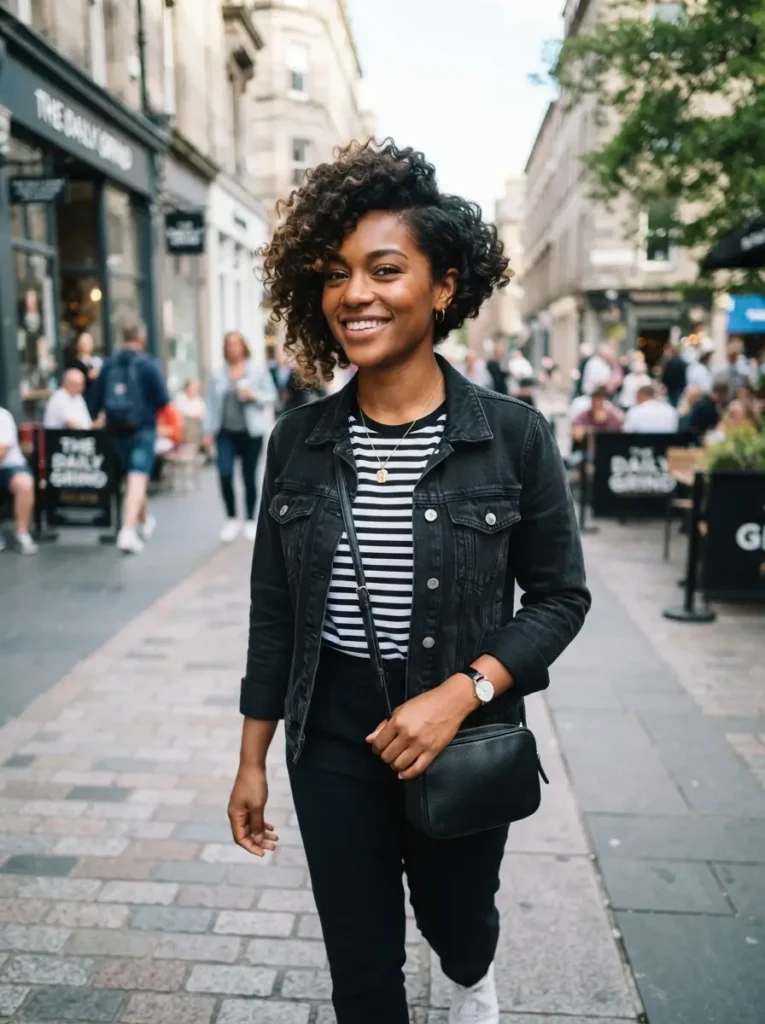
An asymmetrical curly bob is longer on one side, creating a modern and fashion-forward silhouette. The uneven length introduces diagonal movement and allows the curls to fall differently on each side of the face. The difference can be subtle for an everyday style or more dramatic for a bold finish. Because curly hair already has natural variation, the asymmetry can feel soft rather than rigid. It gives the haircut personality without requiring unusual color or complicated daily styling.
This cut suits wavy, curly, and medium-to-thick hair with a fairly consistent curl pattern. Maintenance is medium to high because the difference between the sides must remain intentional. Use curl gel or mousse to define the shape and prevent excess frizz. Ask your stylist to cut and assess the hair in its natural dry state, especially around the longer side. Bring photos that clearly show the amount of asymmetry you prefer. Request balanced internal layers so one side does not become noticeably heavier.
Angled Curly Bob

An angled curly bob is shorter at the back and gradually becomes longer toward the front. This direction creates a lifted neckline while preserving soft curls around the cheeks and jaw. The angle adds structure to the hairstyle without removing its natural movement. It can also reduce heaviness at the back, where thick curls often collect. The longer front sections provide facial framing and make the cut feel elegant, modern, and easy to personalize.
This haircut suits wavy, curly, thick, and medium-density textures. Maintenance is moderate to high because the angle should be reshaped every six to eight weeks. Use curl cream through the lengths and a light gel for definition around the front. Ask your stylist for a gentle angle rather than a severe line, since curls can make extreme differences look uneven. The back should be cut with enough length to allow for shrinkage. Request soft graduation instead of aggressive stacking that may create excessive volume.
Tapered Curly Bob
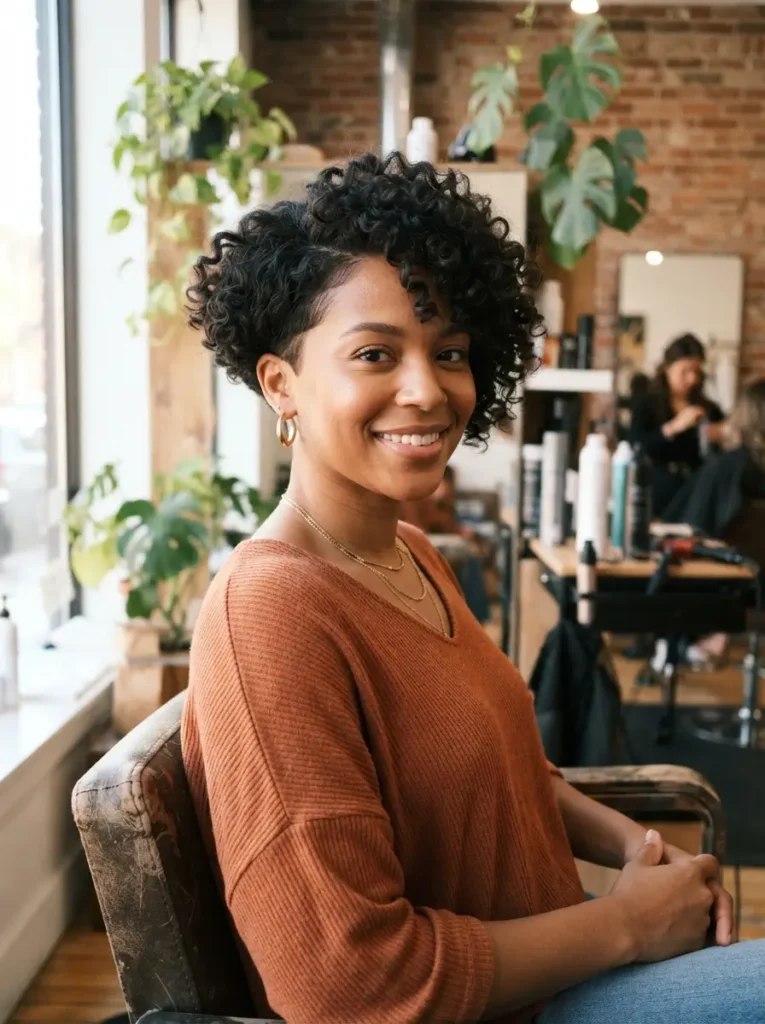
A tapered curly bob keeps more volume around the crown and upper sides while becoming gradually shorter near the neckline. The tapered area gives the haircut a neat finish and prevents heavy curls from sitting on the neck. This structure can make the top appear fuller while maintaining a clean outline from the side and back. The hairstyle feels practical and polished but still leaves enough length for natural curl definition.
This style suits medium curls, coils, thick hair, and women who prefer a shorter neckline. Maintenance is medium to high because the tapered section usually needs trimming every four to eight weeks. Apply curl cream to the longer sections and use a small amount of gel near the nape for control. Ask your stylist for a soft taper that blends into the upper layers rather than a disconnected undercut. Explain whether you want the ears fully visible, partly covered, or framed by longer curls.
Tousled Wavy Curly Bob

A tousled wavy curly bob combines loose bends, irregular curls, and a relaxed finish. The hairstyle does not rely on every section having the same level of definition. Instead, the mix of waves and curls creates natural movement and an effortless appearance. Light layering can encourage texture without making the ends look thin. This bob feels casual enough for everyday wear but can still look polished with a side part, decorative clip, or defined front pieces.
This haircut suits wavy hair, loose curls, and fine-to-medium density. Maintenance is relatively low because the slightly undone finish grows out softly. Use lightweight mousse or wave spray, scrunch the hair, and allow it to air-dry. A diffuser can be used briefly at the roots for more volume. Ask your stylist for a neck-length or jaw-length bob with soft internal layers and a full perimeter. Avoid excessive razor cutting if your ends become frizzy, weak, or difficult to define.
Curly Bob for Fine Hair

A curly bob for fine hair focuses on creating fullness while preserving as much density as possible. The length usually sits between the jaw and neck, removing enough weight to help the curls lift. Layers are kept minimal and strategic, so the ends do not become transparent. A rounded or slightly blunt perimeter can make fine curls appear thicker, while gentle crown shaping prevents the top from lying flat. The result feels soft, light, and naturally voluminous.
This style suits fine strands, low-to-medium density, loose curls, and delicate waves. Maintenance is moderate because regular trims keep the ends healthy and full. Use lightweight mousse or foam instead of heavy butter, oil, or thick cream. Diffuse on low heat and avoid touching the curls until they are dry. Ask your stylist to preserve the perimeter, limit thinning, and add only enough crown movement for lift. Mention any areas where the scalp becomes visible so those sections are not over-layered.
Curly Bob for Thick Hair

A curly bob for thick hair uses internal shaping to remove weight without making the outer surface look thin or frizzy. Hidden layers can help dense curls move more freely and prevent the haircut from expanding excessively around the sides. The final shape may be rounded, angled, or softly layered depending on the curl pattern. When the weight is distributed correctly, thick curly hair can look full and defined rather than bulky or difficult to control.
This haircut suits dense curls, coarse strands, waves, and coils. Maintenance is moderate because internal layers gradually become heavy as the hair grows. Use leave-in conditioner, curl cream, and a light-hold gel to balance moisture and definition. Ask your stylist to remove weight from the interior rather than using thinning shears across the visible surface. Explain where your hair becomes bulky, such as behind the ears or near the lower back. The finished cut should still have enough weight to control frizz.
Short Curly Bob with Deep Bangs

A short curly bob with deep bangs uses a fuller fringe section that begins farther back on the crown. The bangs create a strong frame across the forehead while blending into the rounded sides. This style has a bold, artistic character and can make curls look especially full around the front. It works best when the fringe is shaped according to the natural curl pattern rather than cut into one straight horizontal line.
This hairstyle suits medium curls, thick hair, and women who enjoy a noticeable fringe. Maintenance is moderate to high because the bangs need regular shaping and daily attention. Apply curl cream lightly and finger-coil a few front pieces for consistency. Ask your stylist to cut the fringe dry or check it after drying to avoid excessive shrinkage. Discuss the shortest comfortable length and whether you want the eyebrows visible. Fine or low-density hair may need a narrower fringe section to preserve fullness elsewhere.
Ear-Length Curly Bob

The ear-length curly bob is a compact, confident haircut that sits near the cheekbones or ears. It can resemble a long pixie or a very short French bob, depending on the shape around the back and sides. The short length removes weight and allows curls to spring upward, creating lively movement. It also highlights earrings, cheekbones, and the neckline. The result feels bold yet feminine and can be styled neat, tousled, or softly side-parted.
This cut suits loose curls, tight curls, fine hair, and medium-density textures. Maintenance is high because the short outline may need trimming every four to six weeks. Use a small amount of mousse or curl cream to avoid overwhelming the shape. Ask your stylist to account carefully for shrinkage and leave more length around areas that curl tightly. Discuss whether you want the ears visible or softly covered. A dry-cutting approach can help create a more accurate finished length.
Gray Curly Bob

A gray curly bob highlights natural silver, white, or salt-and-pepper tones while giving the hair a fresh, structured shape. The curls reflect light across the different shades, creating natural dimension without additional color. A chin-length, rounded, or softly layered bob can make gray hair look intentional and modern. The style celebrates natural texture and color while offering an easy length that does not feel heavy.
This hairstyle suits naturally gray curls, mature hair, fine strands, and medium or thick density. Maintenance is moderate because the haircut needs regular shaping, while silver tones may need protection from dullness or yellowing. Use moisturizing curl products and occasional purple shampoo only when needed. Ask your stylist to preserve fullness and avoid excessive thinning, especially if the hair has become finer over time. Request soft facial framing and a shape that still works when the curls are air-dried.
Soft Curly Bob for Mature Women

A soft curly bob for mature women creates gentle movement around the face while maintaining healthy-looking fullness. The length may sit at the jaw or just below it, with subtle layers that support the curl pattern. The style avoids both an overly heavy outline and excessive feathering. It can soften facial features, add lift near the crown, and make natural curls feel easier to manage. The finished look is elegant, current, and suitable for casual or professional settings.
This haircut is especially helpful for fine, thinning, wavy, or curly mature hair, although women of every age can wear it. Maintenance is moderate, with trims generally needed every six to ten weeks. Use lightweight leave-in conditioner and volumizing curl mousse. Ask your stylist for a full perimeter, gentle crown lift, and face-framing curls that complement your preferred part. Avoid very short layers around areas with reduced density. The haircut should still look balanced with minimal daily styling.
How to Choose the Best Short Curly Bob Hairstyle for Your Face Shape
Face shape can help guide the bob length, fringe, parting, and placement of volume. However, these suggestions should remain flexible. Your natural curl pattern, shrinkage, hairline, glasses, and personal preferences are equally important.
Women with round faces may prefer a curly bob that adds height at the crown or creates vertical movement around the sides. A side-parted bob, angled shape, or chin-length cut with longer front curls can make the face appear longer. Avoid placing the widest section directly beside the fullest part of the cheeks unless you enjoy a rounded silhouette.
Oval faces can usually wear most short curly bob hairstyles. Rounded bobs, French cuts, curtain bangs, side parts, and shorter ear-length shapes can all work well. Focus on the features you want to highlight and the amount of maintenance you prefer.
Square faces often look balanced with soft curls around the temples and jawline. A layered bob, side part, curtain fringe, or slightly longer front section can soften strong angles. Avoid creating one rigid line directly at the widest part of the jaw if you want a gentler result.
Heart-shaped faces may benefit from fullness around the jaw and lower sides. Chin-length curly bobs, soft curtain bangs, and rounded ends can balance a wider forehead and narrower chin. Excessive crown height may make the upper face appear wider, so volume should be distributed carefully.
Long or rectangular faces often suit curly bobs that create width around the cheeks. A French bob, full fringe, rounded shape, or jaw-length cut can visually shorten the face. Very high crown volume with closely tapered sides may make the face appear longer.
Diamond-shaped faces can be flattered by softness near the forehead and jaw. Side-swept bangs, chin-length curls, and rounded bobs can complement prominent cheekbones. Avoid concentrating all the width directly beside the cheekbone area.
Ask your stylist to evaluate the haircut when the curls are dry. The finished bob should balance your features from the front, side, and back rather than following one face-shape rule too strictly.
How to Choose the Best Short Curly Bob Hairstyle for Your Hair Type
Straight hair does not naturally form curls, but a short bob can still support heat-styled or chemically created texture. Keep enough length to create bends with a curling tool, and use heat protection. A lightly layered or blunt bob often holds styled curls better than a heavily thinned cut.
Wavy hair works naturally with short bobs because the reduced length can encourage more movement. Soft layers, French bobs, side parts, and tousled shapes can enhance the wave pattern. Avoid excessive layering if the waves are fine or easily lose fullness.
Curly hair benefits from a bob that respects shrinkage and natural curl direction. Rounded layers, chin-length cuts, and tapered shapes can improve definition and balance. The stylist should evaluate individual curls rather than cutting every section to the same wet length.
Thick hair usually needs internal weight removal. Hidden layers can prevent the bob from becoming too wide or heavy while preserving a smooth outer shape. Excessive thinning on the surface may cause frizz, short pieces, and uncontrolled expansion.
Thin hair needs a strong outline and limited layering. A chin-length bob, soft rounded cut, or lightly layered shape can create the appearance of greater density. Heavy bangs and aggressive thinning may remove too much hair from already sparse areas.
Fine hair refers to the diameter of each strand, while thin hair refers to the total number of strands. Fine curls often respond well to lightweight mousse, shorter lengths, and minimal heavy conditioning products. Too much oil or thick cream can quickly flatten the roots.
Coily hair can wear a short bob when the shape is designed around shrinkage and density. Rounded cuts and tapered necklines can create beautiful structure. Moisture, gentle detangling, and protective nighttime care are important for preserving definition.
Always tell your stylist whether you normally air-dry, diffuse, stretch, straighten, or wear your curls naturally. The haircut should work with your most common routine rather than only looking good after salon styling.
Styling and Maintenance Tips
- Apply styling products to damp hair for more even curl definition.
- Use leave-in conditioner when curls need moisture, softness, or easier detangling.
- Choose curl cream for softness and gel or mousse for stronger definition and hold.
- Begin with a small amount of product and add more only where necessary.
- Avoid coating fine curls with heavy oils, thick butter, or dense cream.
- Use richer moisture products on coarse, dry, or tightly coiled textures when needed.
- Wash according to scalp condition rather than following a fixed schedule.
- Use a gentle shampoo to remove oil and buildup without leaving the curls rough.
- Clarify occasionally when gel, mousse, dry shampoo, or oil begins to accumulate.
- Condition the lengths and ends thoroughly, especially after clarifying.
- Detangle gently while the hair is damp and coated with conditioner.
- Start detangling from the ends and move gradually toward the roots.
- Use a microfiber towel or cotton T-shirt instead of rubbing with a rough towel.
- Scrunch the curls upward to encourage their natural pattern.
- Diffuse on low or medium heat when you need faster drying or more root volume.
- Apply heat protectant before diffusing, straightening, or using a curling tool.
- Keep the diffuser moving gently rather than holding intense heat on one area.
- Avoid touching the curls repeatedly while they are drying.
- Break the gel cast gently after the hair is completely dry.
- Refresh flattened curls with water and a small amount of leave-in spray.
- Sleep on a satin or silk pillowcase to reduce friction and frizz.
- Use a satin bonnet or loose pineapple method to protect longer curls overnight.
- Schedule trims every six to twelve weeks, depending on the bob shape.
- Very short, tapered, or asymmetrical bobs may need more frequent shaping.
- Avoid cutting curly bangs at home while they are wet.
- Take photos of your best curl days to help your stylist understand your pattern.
- Protect the hair from chlorine and strong sun exposure when possible.
- Do not brush dry curls unless you intentionally want a fuller, softer finish.
Comparison Table
| Hairstyle | Best For | Hair Type | Maintenance | Styling Product |
| Classic Chin-Length Curly Bob | Timeless facial framing | Wavy, curly | Moderate | Curl cream |
| Rounded Curly Bob | Balanced full shape | Curly, coily, thick | Moderate | Curl gel |
| Short Layered Curly Bob | Definition and crown lift | Curly, thick | Moderate | Styling mousse |
| Curly French Bob | Chic short style | Wavy, loose curls | Moderate to high | Lightweight foam |
| Side-Parted Curly Bob | Root volume | Fine, wavy, curly | Low to moderate | Root mousse |
| Bob with Curtain Bangs | Soft front framing | Wavy, curly | Moderate | Curl cream |
| Bob with Wispy Bangs | Light fringe | Fine curls, waves | Moderate | Light mousse |
| Asymmetrical Curly Bob | Modern statement shape | Curly, medium, thick | Medium to high | Defining gel |
| Angled Curly Bob | Lifted back and longer front | Wavy, curly, thick | Medium to high | Curl lotion |
| Tapered Curly Bob | Clean neckline | Curly, coily, thick | Medium to high | Curl gel |
| Tousled Wavy Curly Bob | Relaxed texture | Wavy, loose curls | Low | Wave spray |
| Curly Bob for Fine Hair | Fuller-looking curls | Fine, thin curls | Moderate | Volumizing foam |
| Curly Bob for Thick Hair | Controlled density | Thick, coarse curls | Moderate | Anti-frizz cream |
| Curly Bob with Deep Bangs | Bold fringe | Medium, thick curls | Medium to high | Curl cream |
| Ear-Length Curly Bob | Short statement cut | Fine, loose, tight curls | High | Lightweight mousse |
| Gray Curly Bob | Natural silver texture | Gray, curly, fine | Moderate | Moisturizing mousse |
| Soft Curly Bob for Mature Women | Gentle fullness | Fine, wavy, curly | Moderate | Leave-in spray |
Common Mistakes to Avoid
Choosing a Curly Bob Only Because It Is Trending
A popular haircut may look attractive online but may not suit your shrinkage, density, curl type, or maintenance routine. A very short French bob, for example, can become much shorter after drying. Choose a version that works with your natural behavior rather than copying a trend exactly.
Ignoring Curl Shrinkage
Curly hair often becomes noticeably shorter as it dries. Cutting the bob to the desired finished length while the hair is wet can produce an unexpectedly short result. Your stylist should calculate shrinkage and check the shape after the curls have dried.
Using a Straight-Hair Cutting Method
Curly hair does not fall in one smooth line. Cutting every section with the same tension may create uneven lengths when the curls spring back. The stylist should consider curl groupings, direction, density, and dry shape.
Adding Too Many Layers to Fine Curls
Layers can create lift, but excessive layering may make fine or thin curls look sparse. The ends can lose their strength, and the scalp may become more visible. Ask for controlled crown movement and a fuller perimeter.
Removing Too Little Weight from Thick Curls
Dense curls can form a wide triangular shape when the lower sections remain too heavy. Internal layering may be needed to distribute the volume. The stylist should remove weight carefully without thinning the outer surface excessively.
Using Too Much Styling Product
Heavy product can stretch curls, flatten roots, and create a greasy or sticky finish. Start with a small amount and distribute it evenly. Add more only to sections that need additional moisture, control, or hold.
Brushing the Hair After It Dries
Dry brushing separates curl groups and may create frizz or unwanted expansion. Detangle while the hair is damp and conditioned. Use fingers, a wide-tooth comb, or a curl-friendly brush according to your texture.
Choosing Bangs Without Considering Shrinkage
Curly bangs can rise several inches after drying. A fringe that looks long while wet may become much shorter than expected. Ask your stylist to begin conservatively and adjust the length after the curls have formed.
Not Showing Reference Photos
Terms such as short, rounded, layered, and tapered can mean different things to different people. Bring photos showing the front, sides, back, and volume level you prefer. Choose references with a similar curl pattern and density whenever possible.
Expecting Every Curl to Look Identical
Natural curls vary across the head. Some sections may be tighter, looser, flatter, or more resistant to definition. A successful curly bob should look balanced overall rather than forcing every curl into the same shape.
Frequently Asked Questions
Are short curly bob hairstyles suitable for every age?
Short curly bobs can suit women of every age because the shape can be customized. A soft layered version may feel relaxed, while a rounded or side-parted bob looks polished. Face shape, curl pattern, and comfort matter more than age.
What is the best curly bob for a round face?
A side-parted, angled, or chin-length curly bob can add vertical movement to a round face. Gentle crown lift may also create balance. Avoid placing the widest volume directly beside the fullest part of the cheeks.
Should curly bobs have layers?
Many curly bobs benefit from layers because they distribute weight and improve curl movement. Fine curls usually need fewer layers, while thick curls may require stronger internal shaping. The layer placement should follow the natural curl pattern.
How short should a curly bob be?
A curly bob may sit near the ears, chin, jaw, or upper neck. The best length depends on shrinkage, density, and the shape you want. Ask your stylist to judge the final position after the curls are dry.
Are curly bobs good for fine hair?
A short bob can help fine curls appear fuller because it removes weight. A strong perimeter and limited crown layers usually create the best balance. Heavy products and excessive thinning should be avoided.
How often should a short curly bob be trimmed?
Most curly bobs need reshaping every eight to twelve weeks. Tapered, ear-length, or sharply angled styles may need appointments every four to eight weeks. The ideal schedule depends on growth rate and the precision of the cut.
Can thick curly hair wear a short bob?
Thick curly hair can look beautiful in a short bob when the weight is distributed correctly. Internal layers may reduce bulk while maintaining a full outer shape. Avoid aggressive surface thinning, which can increase frizz.
What products work best for a curly bob?
Leave-in conditioner provides moisture, curl cream adds softness, and gel or mousse offers definition. Fine curls usually need lighter formulas, while coarse curls may need richer moisture. Apply products to wet hair for even coverage.
Can I wear curly bangs with a bob?
Curly bangs can complement French, rounded, layered, and chin-length bobs. The stylist must account for shrinkage and natural curl direction. Beginning with a longer fringe is safer because it can be shortened after drying.
What should I ask my stylist before getting a curly bob?
Explain your usual routine, shrinkage, preferred length, and desired volume level. Show reference photos with a curl pattern similar to yours. Ask how the bob will look when air-dried and how often it will need reshaping.
Conclusion
Short curly bob hairstyles that look stylish at every age offer a practical way to celebrate natural texture while creating a clear, manageable shape. A classic chin-length bob feels timeless, while a French bob, tapered cut, or asymmetrical shape can provide a more distinctive finish.
The right choice depends on your curl pattern, strand thickness, density, shrinkage, face shape, and maintenance routine. Fine curls usually benefit from fuller ends and limited layering. Thick curls often need carefully placed internal layers to prevent heaviness and unwanted width.
Bring several reference photos to your appointment and choose examples with hair similar to your own. Discuss the dry length, fringe, parting, neckline, and amount of volume you prefer. Ask your stylist to evaluate the haircut after the curls have formed naturally.
Healthy curls also make every bob look better. Use suitable moisture, avoid excessive heat, detangle gently, and protect the hair overnight. Regular trims will keep the shape balanced and prevent the ends from becoming dry or uneven.
A well-designed curly bob should feel comfortable, expressive, and easy to maintain. Choose the version that works with your natural texture and daily routine, and you can enjoy a stylish haircut that feels fresh at any age.